


You pressed the shutter at exactly the right moment. The light was perfect, the subject was mid-action, and your burst sequence was rolling. Then your camera locked up – buffer full, write speed maxed out – and the shot was gone before the card caught up. If you’ve been there, you already know the real cost of a memory card that can’t keep pace with how you shoot.
V60 SD cards exist to close that gap. With a guaranteed minimum sustained write speed of 60 MB/s, Video Speed Class 60 (V60) cards are built for photographers and videographers who work in demanding formats: 4K video, high-frame-rate burst shooting, and extended recording sessions where dropped frames or buffer slowdowns aren’t an option. This guide covers everything you need to know – what V60 actually means, how it compares to V30 and V90, which shooting scenarios it handles, and how to choose the right Lexar V60 SD card for your workflow.
What Is a V60 SD Card?
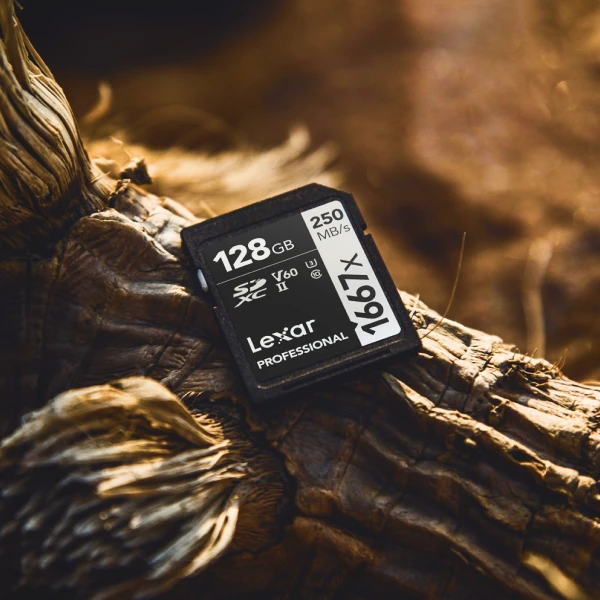
A V60 SD card is a memory card that meets the Video Speed Class 60 standard defined by the SD Association (SDA) – the international organization that governs SD card specifications. The “V60” designation guarantees a minimum sustained write speed of 60 MB/s, regardless of card capacity or conditions. That minimum threshold is what matters for video recording: it tells your camera how much data the card can handle per second without interruption.
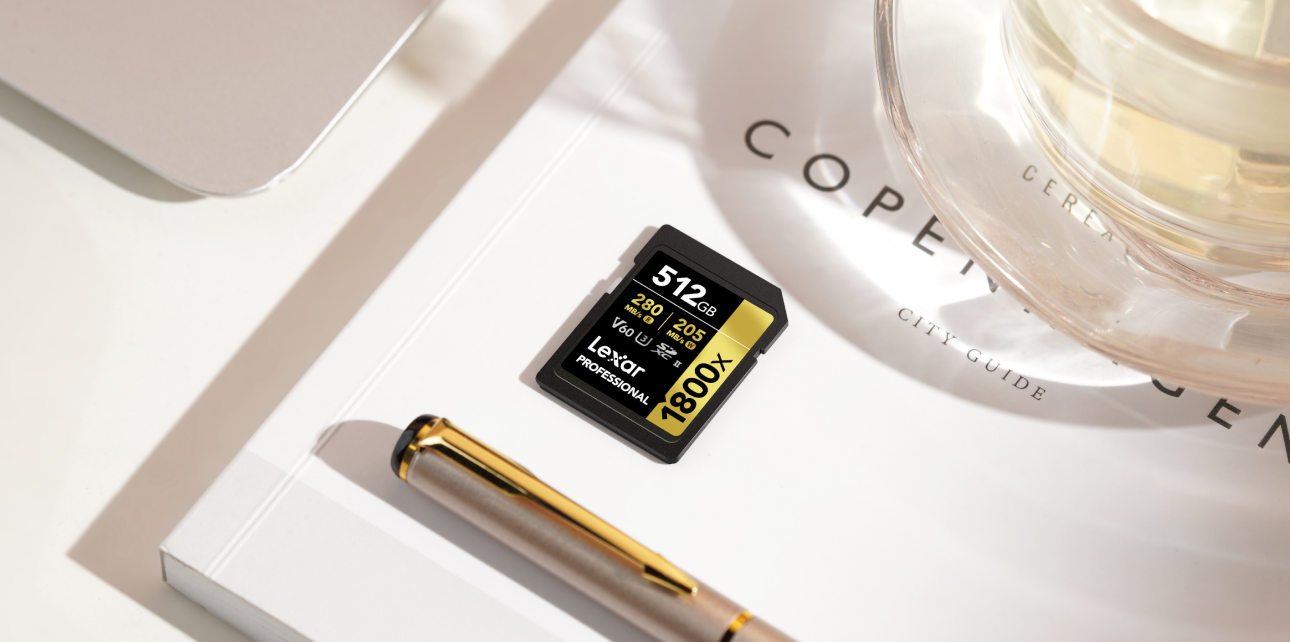
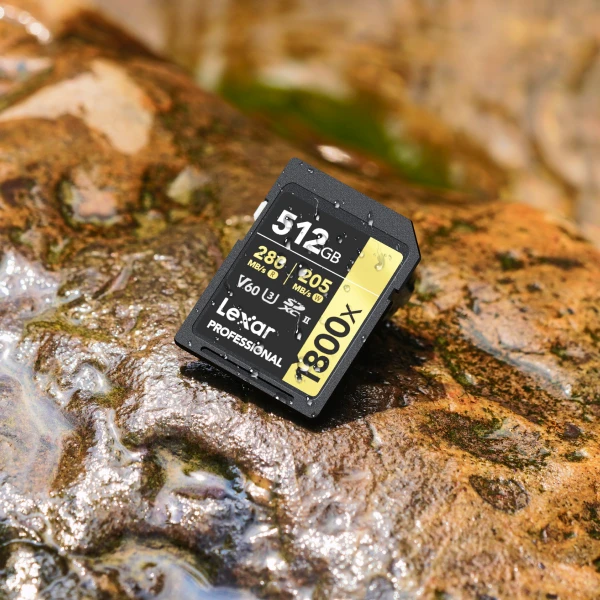
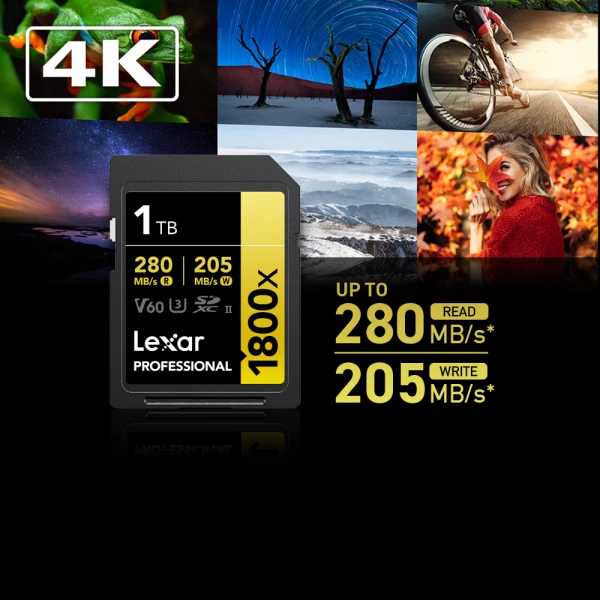
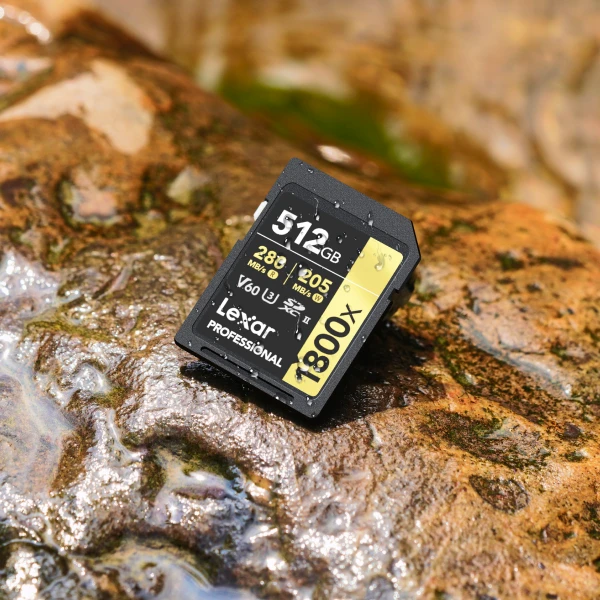
It’s worth understanding the distinction between peak and sustained speeds. Peak read speeds – like the 280 MB/s you’ll see on the Lexar® Professional 1800x SDXC™ UHS-II Card GOLD Series – reflect how fast the card transfers data to your computer. Sustained write speed is what keeps video recording stable. A card can have impressive peak specs and still stutter during 4K capture if its sustained write performance doesn’t meet the format’s requirements.
V60 cards also carry the UHS-II bus interface, which uses a second row of pins to increase data transfer bandwidth. This is why V60 cards outperform UHS-I cards significantly, particularly in write-intensive tasks like continuous video recording and rapid burst photography.
The SD Speed Class System Explained
The SD Association defines several overlapping speed classifications. Here’s how they stack up:
| Speed Class | Min. Sustained Write Speed | Bus Interface | Typical Use |
|---|---|---|---|
| Class 10 / U1 | 10 MB/s | UHS-I | Full HD video, photography |
| U3 / V30 | 30 MB/s | UHS-I | 4K video at 30fps, general photography |
| V60 | 60 MB/s | UHS-II | 4K at 60fps, 6K video, burst photography |
| V90 | 90 MB/s | UHS-II | 8K video, RAW 4K, high-end cinematography |
The jump from V30 to V60 isn’t incremental – it doubles the guaranteed write floor and moves to a fundamentally different bus architecture. For anyone shooting 4K at higher frame rates or working with large-sensor, high-bitrate cameras, that difference is felt immediately in buffer performance and recording stability.
Is V60 Enough for 4K Video?
Yes – for most 4K workflows, a V60 SD card is more than capable. Here’s why that answer matters more than it might seem at first.
4K video bitrates vary significantly depending on the camera and codec. Many popular mirrorless and DSLR cameras record 4K at bitrates between 100 Mbps and 400 Mbps. Converting megabits to megabytes (divide by 8), that’s roughly 12.5 MB/s to 50 MB/s. V60’s guaranteed 60 MB/s minimum sustained write speed sits above even the high end of this range for most consumer and prosumer 4K cameras.
Where V60 becomes particularly important is 4K at 60 frames per second, which pushes bitrates higher – some cameras record 4K/60p at 200-400 Mbps. At those rates, a V30 card may struggle to keep pace reliably, while V60 handles the load without dropping frames. For videographers shooting 4K/60p in formats like XAVC, H.265, or ALL-I codecs, V60 is the right choice.
The one scenario where V60 reaches its ceiling is RAW video recording at very high bitrates – think 12-bit RAW at 6K or above, or cinema-quality formats exceeding 500 Mbps sustained. For those specific use cases, V90 may be the more appropriate tier. But for the majority of professional videographers working in 4K – whether documentary, wedding, event, or commercial – V60 delivers the performance that format demands.
V60 SD Cards for Burst Photography
Burst photography puts a different kind of pressure on a memory card than video does. When you hold down the shutter in continuous mode, your camera writes large, uncompressed or lightly compressed RAW files in rapid succession. The camera’s internal buffer fills up within seconds, and what happens next depends entirely on how fast your card can drain that buffer.
A 45-megapixel RAW file from a camera like the Sony A7R V or Nikon Z8 can weigh in at 50-100 MB per frame. Shooting at 8-10 frames per second, you’re asking the card to sustain 400-1000 MB/s… which isn’t realistic for any SD card. What the card actually does is drain the buffer as fast as possible while the camera manages incoming data. The faster the card’s write speed, the faster the buffer clears – which means you can resume shooting sooner, or shoot more frames before hitting the ceiling.
With a minimum 60 MB/s guaranteed write floor – and actual write speeds considerably higher in Lexar’s V60 lineup – these cards clear buffers significantly faster than V30 alternatives. Wildlife photographers capturing critical moments, sports photographers tracking fast movement, and wedding photographers shooting key ceremony moments all benefit directly from that buffer recovery speed.
Consider the practical difference: if your camera’s buffer holds 30 RAW files and you’re shooting at 10fps, you have about 3 seconds of continuous burst. With a V30 card draining at 30 MB/s versus a V60 card draining at 60+ MB/s, the V60 card gets you back to a clear buffer in half the time. In fast-moving situations, that can be the difference between having a second burst window or missing the moment entirely.
Camera Compatibility: Does Your Camera Support V60 SD Cards?
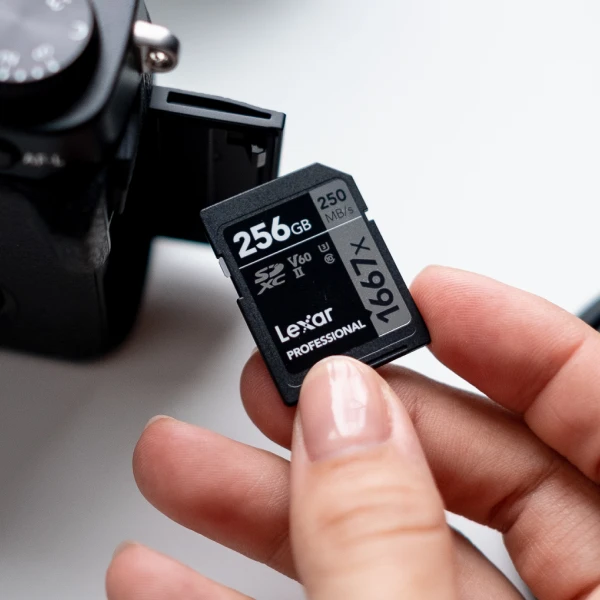
V60 SD cards use the UHS-II interface, which requires a camera (or card reader) with a UHS-II compatible card slot to achieve full performance. This is an important distinction to understand before purchasing.
Cameras with UHS-II SD slots include many current-generation professional mirrorless and DSLR bodies. However, not every camera has UHS-II – and some cameras with UHS-II slots in one bay use UHS-I in the other. Checking your camera’s manual or manufacturer specs page is the most reliable way to confirm.
The good news about V60 SD cards is backward compatibility. Both the Lexar® Professional 1800x SDXC™ UHS-II Card GOLD Series and the Lexar® Professional 1667x SDXC™ UHS-II Card SILVER Series are backward compatible with UHS-I devices. If your camera has a UHS-I slot, these cards will still work – they’ll just operate at UHS-I speeds rather than the full UHS-II performance. You won’t get the card’s maximum potential, but the card itself will function correctly.
For card readers used during file transfer, the same rule applies. A UHS-II compatible card reader is required to achieve the 280 MB/s read speeds of the Gold Series or the 250 MB/s of the Silver Series. Using a UHS-I reader will bottleneck transfer speeds to UHS-I limits regardless of the card’s capabilities.
V60 vs V30 vs V90: Which SD Card Class Do You Actually Need?
This is the question most photographers and videographers wrestle with when upgrading their storage. The answer depends on what you’re shooting – and being honest about that is more useful than defaulting to the highest spec available.
V30 vs V60: Where the Line Is Drawn
V30 cards guarantee a minimum 30 MB/s write speed and use the UHS-I bus interface. They’re adequate for 4K video at 30fps in many consumer cameras and for general RAW photography. The gap between V30 and V60 becomes meaningful in three specific situations:
- 4K at 60fps or higher: Higher frame rates increase bitrate demands in a way that V30 may not sustain reliably, depending on the camera and codec.
- High-resolution burst shooting: Cameras with 40+ megapixel sensors produce large RAW files; V60’s faster write floor clears the buffer more quickly.
- Extended recording at high bitrates: Some cameras recording in ALL-I or high-bitrate codecs push closer to or beyond V30’s limits over sustained periods.
If your camera records 4K at 30fps and you shoot RAW casually rather than in sustained bursts, V30 may serve you well. But if you’re regularly shooting 4K/60p, working with a high-resolution sensor in continuous burst mode, or capturing long video sequences in professional codecs, V60 is the tier that actually covers those use cases.
V60 vs V90: Is V90 Worth the Premium?
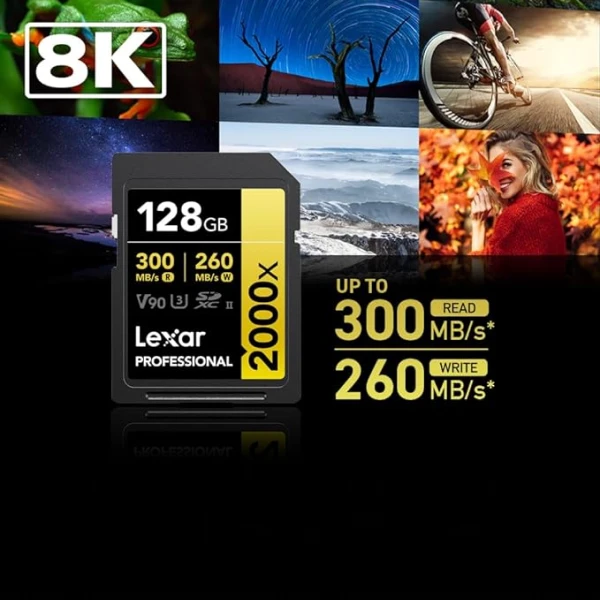
V90 cards guarantee 90 MB/s minimum sustained write and are designed for workflows that exceed what V60 handles – primarily 8K video, high-bitrate RAW video recording, and cinema-level production. Comparing V60 and V90 directly, the performance gap matters most in specific scenarios:
- 8K video: 8K formats generate significantly more data per second than 4K, and V90’s 90 MB/s floor provides the overhead that 8K recording needs.
- RAW video formats: Some cameras offer RAW video output via SD slot at high bitrates; V90 handles these more comfortably.
- Professional cinema work: For commercial productions where dropped frames or buffer stalls carry real cost, V90 provides additional headroom.
For most photographers and videographers shooting 4K – even at high frame rates – V60 provides the performance needed at a more accessible price point. V90 is the right choice when your specific camera, codec, and format demand it. Paying for V90 overhead when your workflow tops out at 4K/60p is paying for capacity you’re not using.
Head-to-Head Spec Comparison: V30, V60, V90
| Spec | V30 | V60 | V90 |
|---|---|---|---|
| Min. Sustained Write | 30 MB/s | 60 MB/s | 90 MB/s |
| Bus Interface | UHS-I | UHS-II | UHS-II |
| 4K/30fps | Yes | Yes | Yes |
| 4K/60fps | Marginal | Yes | Yes |
| 6K Video | No | Yes (most formats) | Yes |
| 8K Video | No | Limited | Yes |
| RAW Video | No | Limited | Yes |
| Burst (High-Res RAW) | Slower buffer clear | Fast buffer clear | Fastest buffer clear |
Choosing the Right Lexar V60 SD Card
Lexar offers two V60 SD card lines, each designed with a specific performance and value profile. Here’s what separates them and how to think about which fits your work.
Lexar® Professional 1800x SDXC™ UHS-II Card GOLD Series
The Gold Series is Lexar’s flagship V60 SD card. Its read/write specifications break down by capacity:
- 64GB – 128GB: Up to 280 MB/s read, up to 210 MB/s write
- 256GB – 1TB: Up to 280 MB/s read, up to 205 MB/s write
Available capacities: 64GB, 128GB, 256GB, 512GB, and 1TB. The Gold Series is rated V60 and UHS Speed Class 3 (U3), making it compatible with any camera requiring U3 or V60 minimum. It’s water-proof, temperature-proof, shockproof, vibration-proof, and X-ray-proof – built for demanding field conditions. All Lexar products, including the Gold Series, undergo extensive testing in the Lexar Quality Labs across thousands of different devices to verify performance, compatibility, and reliability. The card carries a limited lifetime warranty.
This is the right card for photographers shooting high-resolution RAW in extended bursts, videographers working in 4K/60p and 6K formats, and professionals who need maximum throughput for faster post-production transfers.
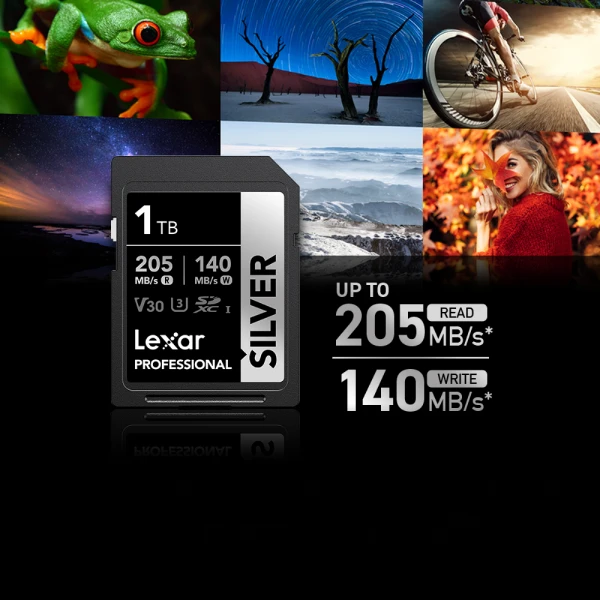
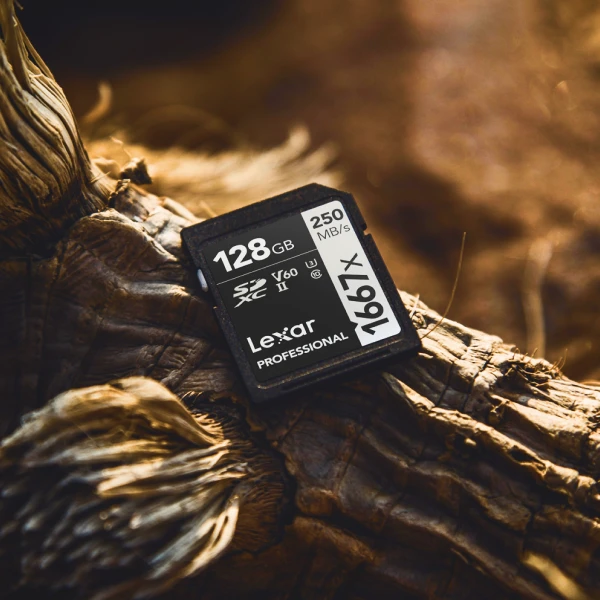
Lexar® Professional 1667x SDXC™ UHS-II Card SILVER Series
The Silver Series delivers strong V60 performance at a more accessible price point:
- All capacities: Up to 250 MB/s read, up to 120 MB/s write
Available capacities: 64GB, 128GB, and 256GB. The Silver Series is also rated V60 and U3, backward compatible with UHS-I devices, and backed by the same Lexar Quality Labs testing process. Limited lifetime warranty included.
The Silver Series is well suited for wedding and event photographers needing reliable V60 performance across long shooting days, videographers working in 4K who want high-capacity cards at a lower cost, and professionals who want to carry more cards rather than fewer larger ones.
Capacity Planning for V60 Workflows
How much storage do you need? That depends on what you shoot:
- 4K video at ~100 Mbps: Approximately 45 GB per hour of footage
- 4K video at ~200 Mbps: Approximately 90 GB per hour
- 4K video at ~400 Mbps (high-bitrate): Approximately 180 GB per hour
- RAW photos (45MP sensor, ~80MB per file): Approximately 12 RAW files per GB
For a full day of event photography with video mixed in, 256GB to 512GB gives comfortable working room. Documentary or commercial videographers shooting high-bitrate 4K over multi-day projects benefit from the 1TB option in the Gold Series. Choosing the right SD card for camera performance comes down to matching capacity and write speed to your actual workflow, not the highest spec on the shelf.
Getting the Most Out of Your V60 SD Card
A V60 card performs to its rated specifications when used correctly. A few practices make the difference between consistent performance and avoidable frustration.
- Format in-camera, not on your computer: Always format your SD card using your camera’s formatting tool. This sets the card’s file system to what your camera expects and clears fragmentation that can slow write performance over time.
- Use a UHS-II card reader for transfers: Your card’s read speed – up to 280 MB/s on the Gold Series – is only achievable with a UHS-II compatible card reader. A UHS-I reader will bottleneck transfers regardless of what your card is capable of.
- Keep firmware current: Both your camera and card reader may have firmware updates that affect SD card performance and compatibility. Checking manufacturer support pages periodically is worth the time.
- Avoid filling cards to the very end: Leaving a small buffer of free space – around 10% – can help maintain consistent write performance, particularly in write-intensive recording scenarios.
- Store cards properly: Keep cards in protective cases when not in use. Both Lexar V60 card series are rated for a wide operating temperature range (0°C to 70°C) and non-operating range (-25°C to 85°C), but physical protection matters for longevity.
Frequently Asked Questions About V60 SD Cards
Is a V60 SD card enough for 4K video?
Yes, for most 4K workflows. V60 guarantees a minimum 60 MB/s sustained write speed, which covers 4K recording at 30fps and 60fps in most consumer and prosumer cameras. High-bitrate 4K formats (200–400 Mbps) are handled reliably by V60. For 4K at 120fps, which some newer mirrorless cameras support, the higher data rates may push toward V90 depending on the codec and bitrate your camera uses — check your camera’s required write speed in its specification sheet. Only specific scenarios like RAW video at 6K+ or formats exceeding 500 Mbps sustained push into V90 territory.
What is the difference between V60 and V90 SD cards?
The primary difference is the minimum guaranteed sustained write speed: 60 MB/s for V60, 90 MB/s for V90. Both use the UHS-II bus interface. V90 is designed for 8K video, RAW video recording, and cinema-level production. V60 handles 4K video at all common frame rates and high-resolution burst photography. For most professional photographers and videographers, V60 delivers the performance those workflows require at a more accessible price. See the full V60 vs V90 comparison for a detailed breakdown.
Can I use a V60 SD card in a camera that only supports UHS-I?
Yes. Lexar V60 SD cards — including both the Gold Series 1800x and Silver Series 1667x — are backward compatible with UHS-I devices. The card will work in a UHS-I slot but will operate at UHS-I speeds rather than the full UHS-II performance. You won’t get the card’s peak read/write capabilities, but it will function without issue.
What’s the difference between V60 and V30 SD cards?
V60 guarantees 60 MB/s minimum sustained write versus V30’s 30 MB/s. V60 also uses the UHS-II bus interface, while V30 typically uses UHS-I. The practical difference is meaningful for 4K/60p video, high-bitrate recording, and burst photography with large RAW files. Comparing V30 and V60 directly shows where the speed gap affects real shooting scenarios.
What does “V60” actually mean on an SD card?
The “V60” designation is part of the Video Speed Class rating system defined by the SD Association. It means the card is certified to maintain a minimum sustained write speed of 60 megabytes per second continuously — not just in peak or burst conditions. This guaranteed floor is what matters for video recording, where data must be written at a consistent rate to avoid dropped frames or recording interruptions.
How much 4K video can a 256GB V60 SD card hold?
It depends on the bitrate. At 100 Mbps (common in many mirrorless cameras), approximately 5.7 hours of 4K footage fits on 256GB. At 200 Mbps (higher-quality 4K codecs), that drops to roughly 2.8 hours. At 400 Mbps (high-bitrate ALL-I formats), approximately 1.4 hours. For video-heavy projects, the 512GB and 1TB options in the Lexar Professional 1800x Gold Series provide extended recording room without card swaps.
Can I use a V60 SD card for burst RAW photography?
Yes — and buffer performance is where V60 cards make a noticeable difference over V30. The sustained 60 MB/s write speed clears your camera’s buffer faster between bursts, allowing longer continuous shooting sequences before the camera slows down. For event, sports, and wildlife photographers shooting RAW at 10+ frames per second, the faster write speed means fewer pauses and missed shots during critical moments. Both the Lexar Professional 1800x Gold Series and 1667x Silver Series are optimized for high-speed burst shooting with compatible UHS-II mirrorless and DSLR cameras.
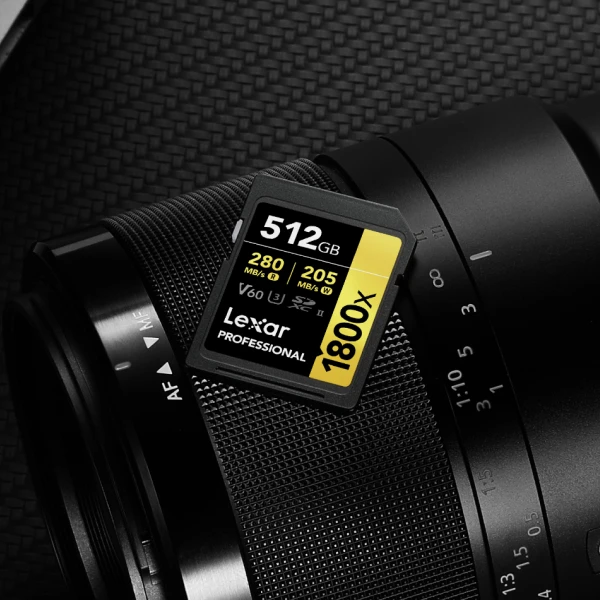
Ready to find the right V60 SD card for your work? Explore the Lexar® Professional 1800x SDXC™ UHS-II Card GOLD Series for maximum performance, or the Lexar® Professional 1667x SDXC™ UHS-II Card SILVER Series for professional-grade V60 speed at a strong value. Questions about which card fits your camera setup? Contact us – we’re here to help you get the right match.