


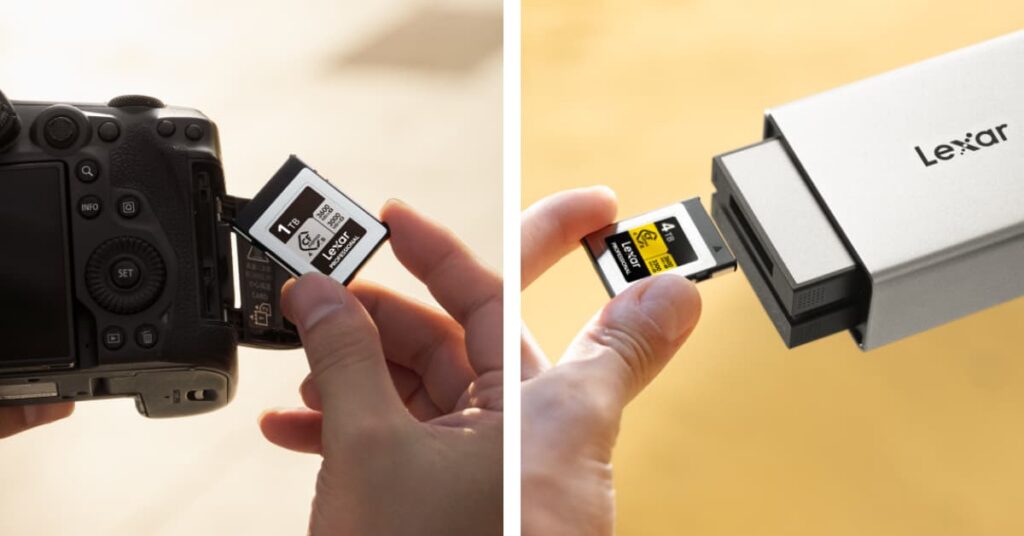
Most cameras currently on the market write to CFexpress cards at speeds well within CFexpress 2.0 limits. The camera’s processor and sensor pipeline – not the card – sets the write ceiling during capture. The moment that card leaves your camera and connects to a reader, that 4.0 speed advantage becomes very real.
Post-production transfers run 4x faster than CFexpress 2.0 using a compatible USB 4.0 reader. For professional creators handling hundreds of gigabytes per shoot, that difference is measured in hours, not seconds. So no, your camera may not write at 3600MB/s today, but your offload workflow absolutely can.
Why Cameras Don’t Write at CFexpress 4.0 Speeds
This is where it helps to understand what actually happens between pressing the shutter and data landing on your card. The pipeline isn’t a single straight line from lens to storage – it passes through several stages, each with its own throughput ceiling.
When you press the shutter, light hits the sensor. The sensor converts that light to a digital signal and passes it through an analog-to-digital converter. That data then moves to the image processor – the DIGIC, EXPEED, BIONZ XR, or equivalent chip inside the body, where it’s processed, compressed if needed, and queued into a buffer. Only after clearing that buffer does data flow out to the card slot.
At every stage of that pipeline, the sensor resolution, processor speed, and buffer size act as constraints. Even in a worst-case scenario for memory cards, like a Canon EOS R5 Mark II recording 8K RAW video at maximum quality, the sustained write requirement sits around 325MB/s. That’s roughly 10% of what a CFexpress 4.0 Type B card can deliver, in camera. The card isn’t the bottleneck. The camera’s internal architecture is.
This isn’t a flaw in camera design; it’s a thermal and engineering reality. The image processor generates significant heat when operating at maximum throughput. Fitting a PCIe 4.0 controller capable of sustaining 3000MB/s write speeds inside a camera body, where thermal management is already a challenge, would require heat dissipation solutions that current mirrorless form factors can’t accommodate. Power draw is another factor: high-speed NVMe controllers consume meaningfully more power than their predecessors, which affects battery performance in a category where every mAh matters.
Camera manufacturers are aware of CFexpress 4.0 and making deliberate choices about when to implement it. Those choices are grounded in thermal constraints and practical write speed requirements, not indifference to the standard.
Current Camera Write Speeds vs CFexpress 4.0 Transfer Speeds
Separating in-camera write performance from post-production transfer speed is the key to understanding where CFexpress 4.0 earns its value. These are two different operations with very different speed profiles.
| Scenario | Sustained Write Needed | CFexpress 2.0 Capable? | CFexpress 4.0 Advantage |
| 4K 60fps RAW video | 200MB/s | Yes | Minimal (in-camera) |
| 8K RAW video (Canon R5 class) | 325MB/s | Yes | Minimal (in-camera) |
| High-fps burst (sports/wildlife) | Up to 700MB/s | At limit | Buffer clearance speed |
| Post-production offload (1TB) | N/A – reader speed | ~18 min @ 900MB/s | Under 5 min @ 3600MB/s |
| Multi-card offload (4TB shoot day) | N/A – reader speed | ~74 min | Under 19 min |
The pattern is clear. During capture, CFexpress 4.0 and CFexpress 2.0 operate within the same effective performance window for current cameras. During offload (which is independent of camera write speed and governed entirely by reader bandwidth) CFexpress 4.0 delivers a 4x transfer speed advantage using a reader like the Lexar® Professional Workflow CFexpress™ 4.0 Type A Card Reader or Lexar® Professional Workflow CFexpress 4.0™ Type B Card Reader, both supporting speeds up to 40Gbps.
There’s one partial exception worth noting. In high-frame-rate burst shooting, buffer clearance speed does affect how quickly a camera can resume shooting after a burst sequence fills the buffer. A card with higher read and write headroom can clear the buffer faster between bursts – which is why the Lexar® Professional GOLD CFexpress™ 4.0 Type A Card’s sustained write speeds up to 1400MB/s have practical benefit even in current-gen Sony Alpha bodies during extended burst sequences.
CFexpress 4.0 Camera Support: What the Roadmap Looks Like
We want to be direct rather than speculative here: no camera manufacturer has publicly committed to a launch date for a body natively supporting CFexpress 4.0 write speeds. The thermal and power constraints are real, and camera engineers aren’t dismissing them.
What is known and verifiable from industry development history, is that card standards have consistently preceded camera implementation by one to two product generations. CFexpress Type A itself followed this pattern: the standard was ready before widespread camera adoption caught up. PCIe 4.0 is already standard in laptops and desktop systems, meaning the supporting interface ecosystem is mature. When camera processors reach the throughput ceilings that make PCIe 4.0 write speeds genuinely useful in-body, the infrastructure will be ready.
Several conditions are converging toward that point. Sensor resolutions are increasing, pushing higher per-frame data volumes. High-frame-rate modes are becoming standard across mid-range and flagship bodies. Cinema-quality internal RAW recording is moving from flagship bodies into mid-range options. Each of these trends increases the sustained write requirements on card slots – and at some point, the distance between CFexpress 2.0’s limits and what cameras require will close.
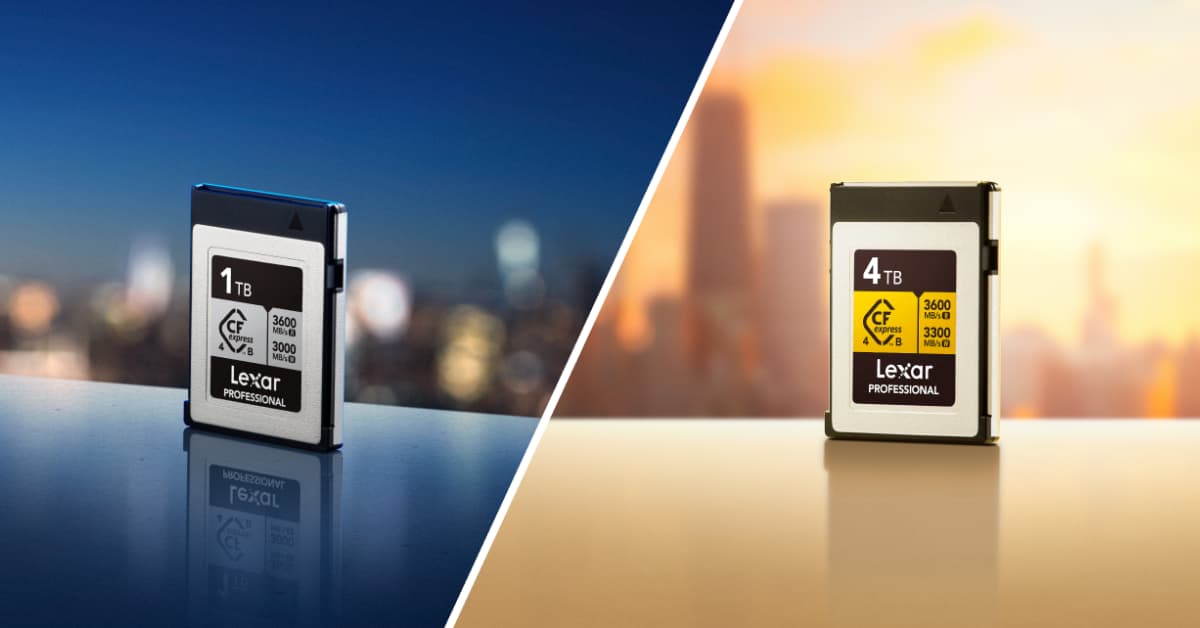
When that happens, cameras supporting CFexpress 4.0 write speeds will need CFexpress 4.0 cards from day one. The Lexar® Professional SILVER CFexpress™ 4.0 Type A Card and Lexar® Professional GOLD CFexpress™ 4.0 Type B Card aren’t cards you’ll need to replace when that generation arrives – they’re the cards that will be ready for it.
Why CFexpress 4.0 Camera Compatibility Is the Wrong Frame
The question “do cameras support CFexpress 4.0?” assumes that camera write speed is the primary value. That idea misses where professional workflows actually spend time.
Post-production is where hours go. A typical professional creator spends more cumulative time offloading and backing up footage than any camera body’s write performance will ever affect. A wedding photographer shooting two events per weekend generates terabytes of content that need to move from card to computer or portable SSD before editing begins. A commercial videographer on a multi-day production offloads terabytes nightly. A solo YouTuber hitting a weekly upload schedule is offloading a terabyte or more monthly.
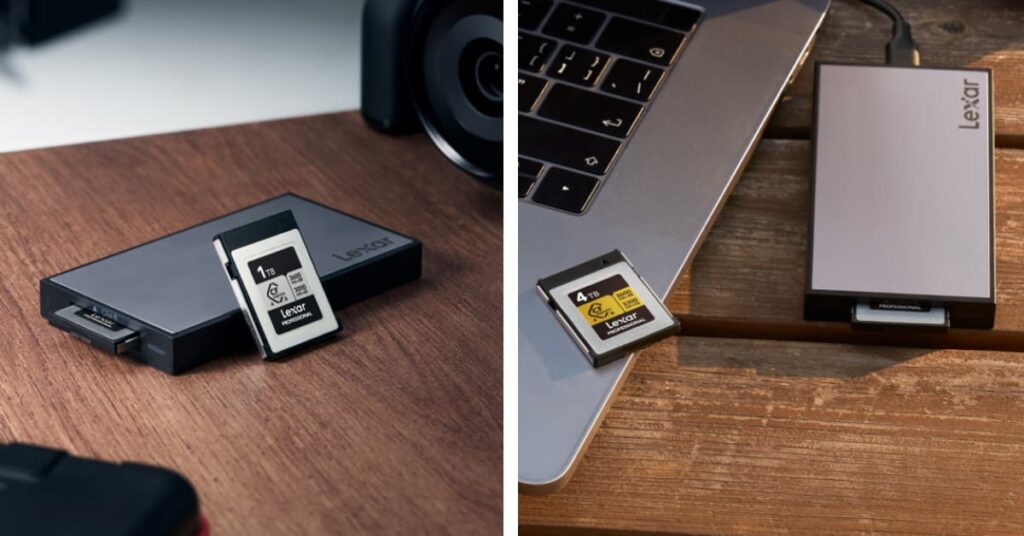
None of those offload workflows are constrained by camera write speed. They’re constrained by reader bandwidth – and that’s exactly where CFexpress 4.0 operates at its full rated speed today, with any current CFexpress 4.0-compatible card, without waiting for future camera bodies.
The additional value layers are real too. Larger capacities on CFexpress 4.0 cards (up to 2TB on the Lexar® Professional SILVER CFexpress™ 4.0 Type A Card and up to 4TB on the Lexar® Professional GOLD CFexpress™ 4.0 Type B Card) reduce mid-shoot card swaps regardless of write speed generation. IP68 dust and water resistance, 5-meter drop protection, and limited lifetime warranty coverage apply to the card you’re using today, not some future body.
Making the Decision Now vs Waiting
If you’re weighing whether to invest in CFexpress 4.0 before your camera body supports those write speeds natively, consider what you’re actually buying:
- 4x faster post-production offloads – available today, with any compatible reader and USB 4.0 or Thunderbolt connection on your workstation
- Future-proofed write performance – when camera bodies catch up to 4.0 write speeds, you won’t need to replace your cards
- Larger capacity options – more storage means fewer card swaps in the field, regardless of which speed generation you’re on
- Improved buffer clearing – even at current camera write rates, the headroom in 4.0 sustained write speeds benefits burst-heavy shooting scenarios
For a detailed breakdown of how that ROI calculates across different shooting volumes, and a framework for deciding exactly when the investment makes financial sense, see our guide on whether CFexpress 4.0 is worth it for professional creators.
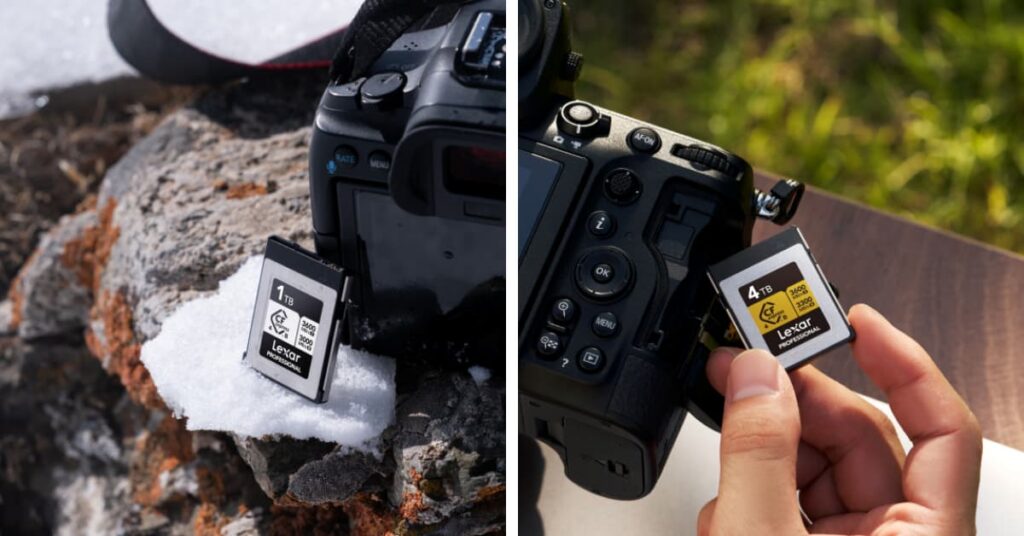
The camera compatibility question has a clean answer: CFexpress 4.0 cards work in any camera designed for the CFexpress format. They operate at the speed the camera supports during capture, and at full 4.0 speeds the moment you connect them to a matched reader. You’re not waiting for permission from a future camera body to realize the value of the investment you make today.