



Rory Kramer has spent his career capturing moments that don’t repeat themselves. Throughout the years, Kramer has found a specialization in capturing unique moments found in a Blink-182 stadium tour, rare wildlife encounters, and once-in-a-lifetime shots in a national park.
In Kramer’s world, he rarely gets a second take, and the technical backbone of his work matters as much as the eye behind the camera. Over the years, he’s found a method to the madness that works wonders for him, and now he’s kind enough to share it with the world.
Here’s how one of professional photography’s most versatile shooters builds a workflow that protects the moment, no matter what kind of shoot he’s on.
Gear Built for Speed and Flexibility
Kramer’s go-to camera is the Canon EOS R5 Mark II, specifically because it lets him move fluidly between photo and video without missing a beat. That flexibility is essential for the run-and-gun style used throughout his outdoor photography and music photography work.
What’s in the bag changes depending on the job. For a concert, he’ll carry a range of focal lengths: a 28mm-70mm, a 70mm-200mm, and a 7mm-14mm fisheye. He’ll also include fast prime lenses to handle the low light that comes standard at most shows.
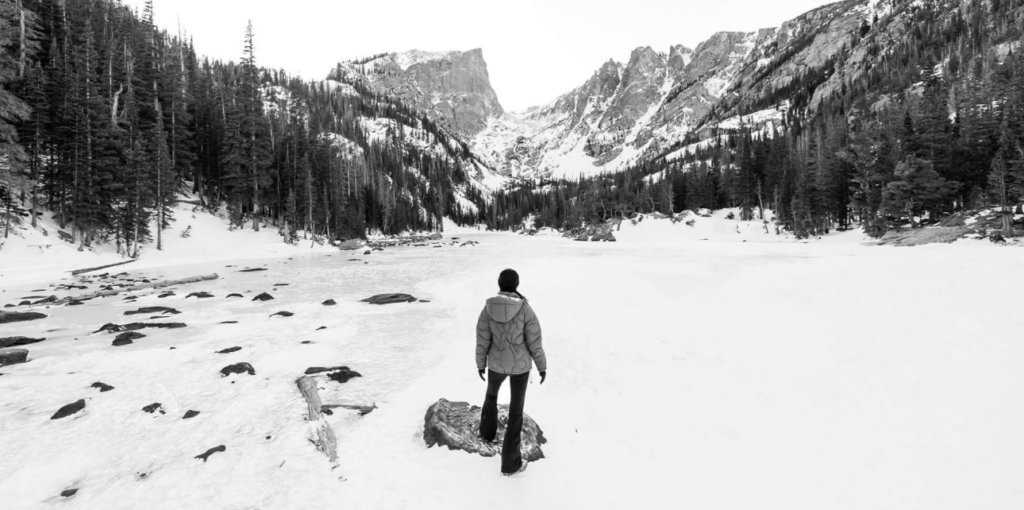
For wildlife or outdoor photography, Kramer’s kit gets simpler: the Canon R5 Mark II and a single long lens, like a 400mm, mostly going handheld as he is on the move but if a certain moment calls for it, he mounts his setup on a tripod for a long, patient wait.

Regardless of the lens on the front of the camera, one piece of gear never changes: the memory card in the body.
Required Storage: CF Express Cards
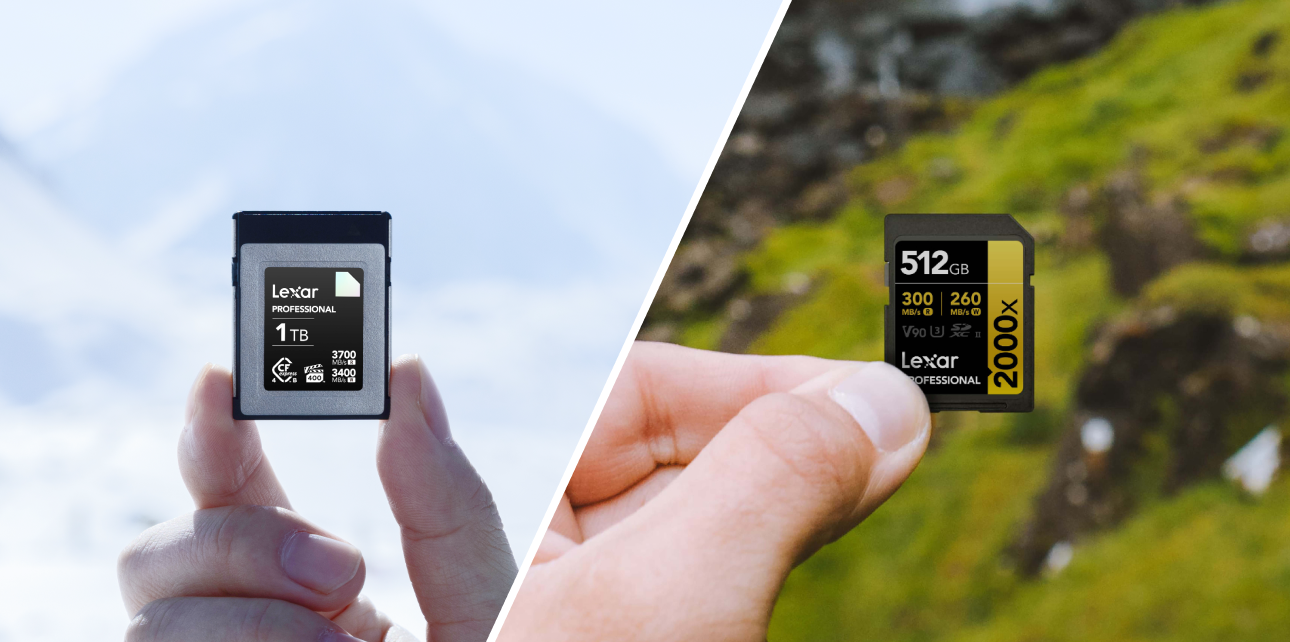
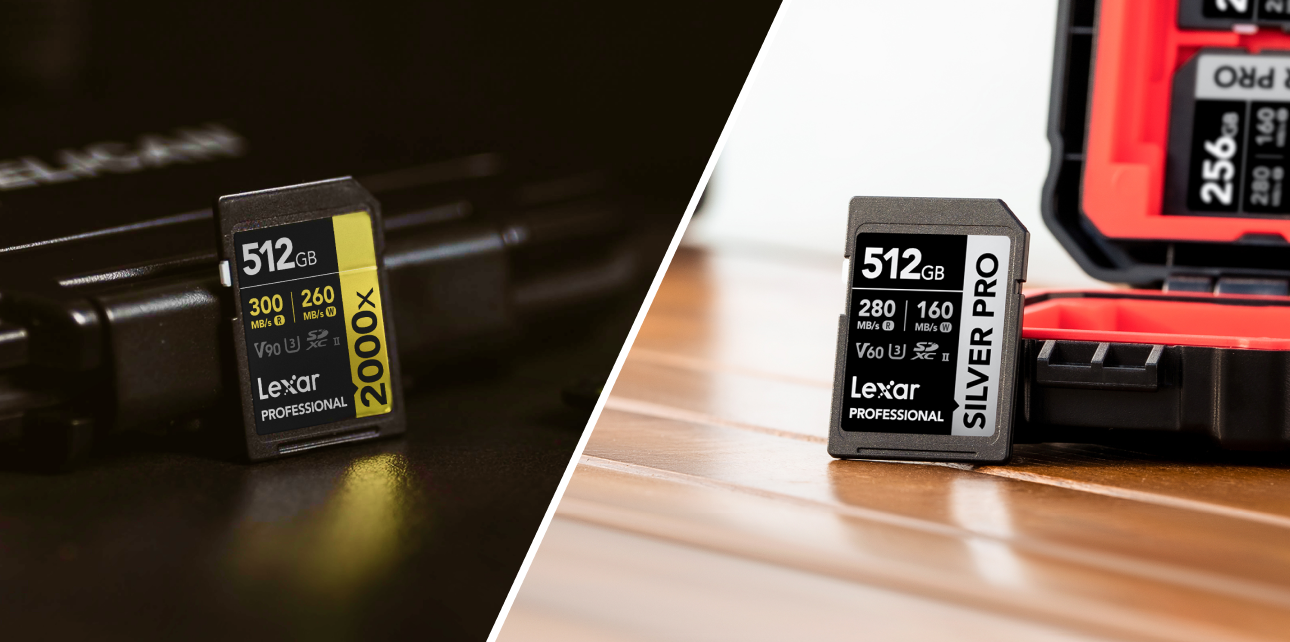
Kramer shoots almost exclusively on Lexar® Professional GOLD CFexpress™ 4.0 Type B Cards, typically reaching for a 2TB or 4TB CFexpress card, though he also keeps 512GB and 256GB Lexar CFe cards in rotation, depending on the job. According to Kramer, a CFe card with enough headroom means he never has to think about storage in the middle of a critical moment.
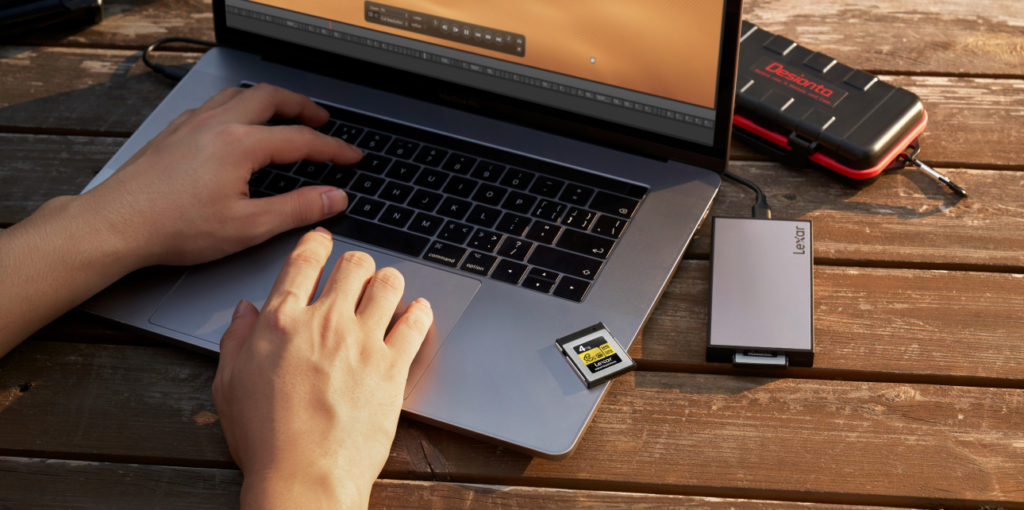
“It gives me that breathing room,” Kramer explains. “If I have a camera mounted on a tripod to record an animal, it can sometimes take twenty-five minutes before anything happens.”
A high-capacity CFexpress card means he’s not stopping the clip, deleting footage, or freeing up space right as the action starts. For someone whose entire career is built on capturing fleeting moments, that margin is everything.
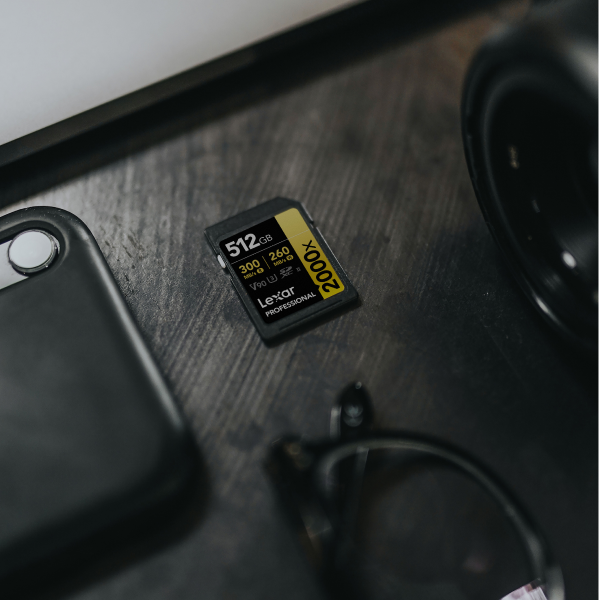
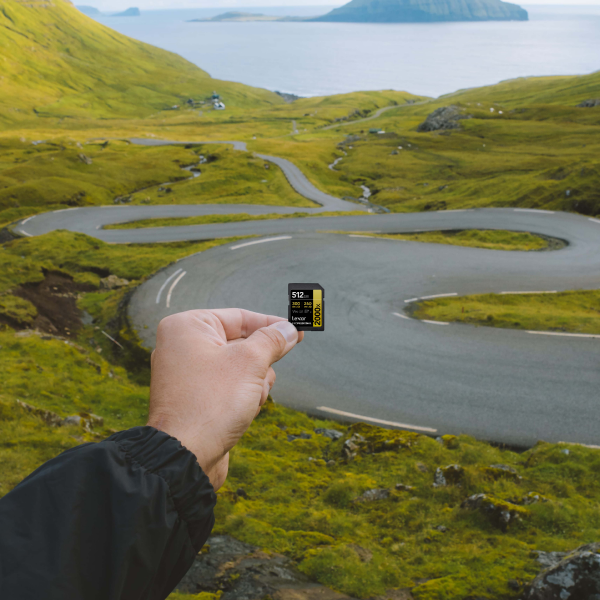
Rory also keeps a Lexar® Professional 2000x SDXC™ UHS-II Card GOLD Series in his pocket as a backup on shoots that could unexpectedly extend. He’s been on many “quick five-minute hikes” that turn into a two-mile trek to a waterfall. Knowing his gear, and always having a spare Lexar SD card on hand, gives him the space to always catch the shot.
When Formatting Almost Cost Everything
Reliability is one thing, but getting the help you need when you need it is another. When Kramer almost lost a once-in-a-lifetime shot during a formatting whoopsie, Lexar was there to help.
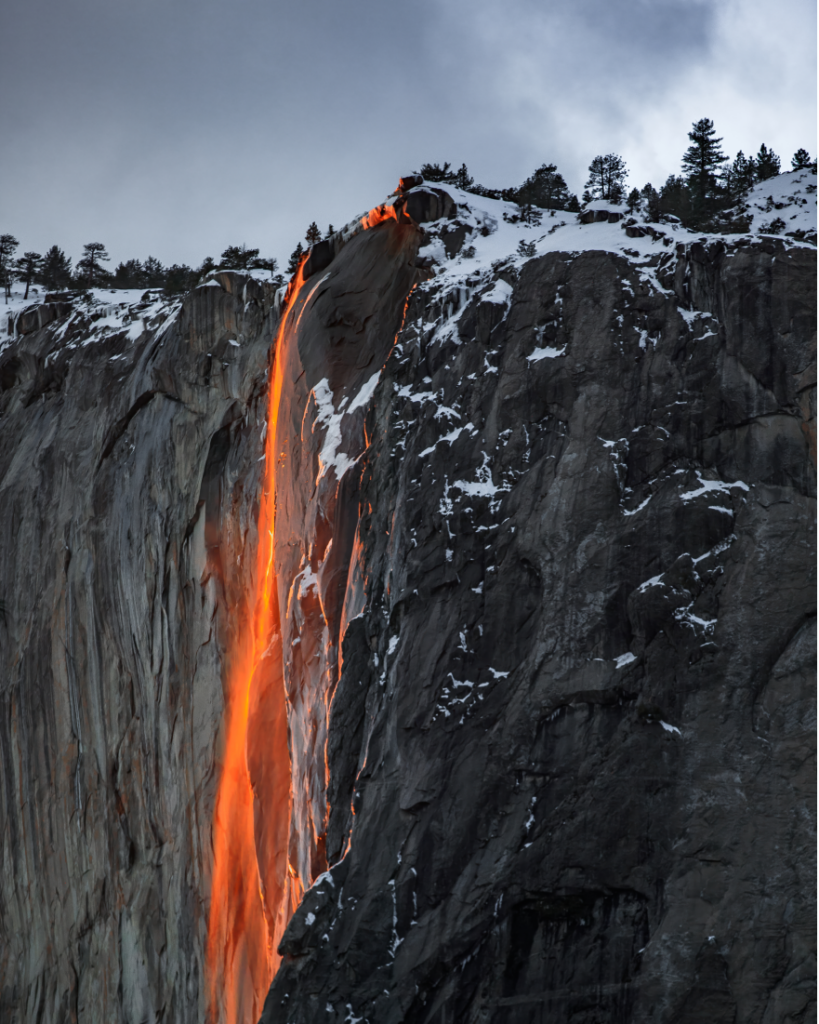
In February 2019, Kramer took a road trip to Yosemite National Park for the Yosemite Firefall, a rare natural phenomenon that happens only one or two days a year. When the sun sets hits a specific waterfall at just the right angle, it glows like flowing lava. Thousands of people pack into one narrow spot to see it, and the viewing window only lasts a few moments.
That evening, the conditions lined up perfectly. “It was like this magical moment,” Kramer recalls. “I got the shot of one of nature’s most fleeting displays.”
Back at the hotel that night, juggling footage from multiple cameras and people at once, Kramer’s usual workflow got tangled. He believed he had transferred everything to his hard drive.
He hadn’t. Kramer formatted the card.
“I nearly had a heart attack,” he says. The realization hit him that the footage he’d just risked a full road trip to capture was all for nothing. The phenomenon that only lines up once a year (weather permitting) was gone.
Kramer went back the next evening anyway, but the conditions weren’t the same.
That’s when Kramer reached out to Lexar directly and explained what happened: he’d shot the footage, formatted the card, and needed to know if there was any way to get it back.
Lexar responded quickly and sent him the Lexar Recovery Tool. Using the recovery software, Kramer regained the footage he thought was lost for good. The entire process, from the moment of panic to complete data recovery, took less than 24 hours.
That experience is why Kramer uses Lexar memory cards today. What could have been a nightmare was just an inconvenience, thanks to Lexar.
“The fact that I was able to actually get somebody, customer service, to respond to me in a quick fashion and actually deliver or figure out a solution made me a believer,” says Kramer. “I was just like: say no more.”
Today, a print from that recovered Firefall shoot hangs proudly in his house, and the footage lives on his Instagram. A photo that was nearly destroyed was saved by fast support and the right recovery software.
The Backup Routine: One System, Every Time
Kramer’s current system was born out of an earlier mistake. Back around 2018, while editing with six hard drives connected at once, a photographer friend pointed out that Kramer had no consistent way to find anything. He just kept things organized in his head.
Both amazed and horrified in equal parts, that friend helped Rory build a folder structure that Kramer has used on every single shoot since.
The system is simple and repeatable:
- Every project gets a master folder named for the subject and date
- Inside that folder, content is split into Photo and Video subfolders, with raw clips organized underneath.
- For multi-day work like a tour, each city gets its own dated subfolder nested under the overall tour name, so a specific night’s footage is always traceable by location and date.
Example:
Super Cool Music Band – 7.4.2026
- Photo
- Video
- Raw Clips
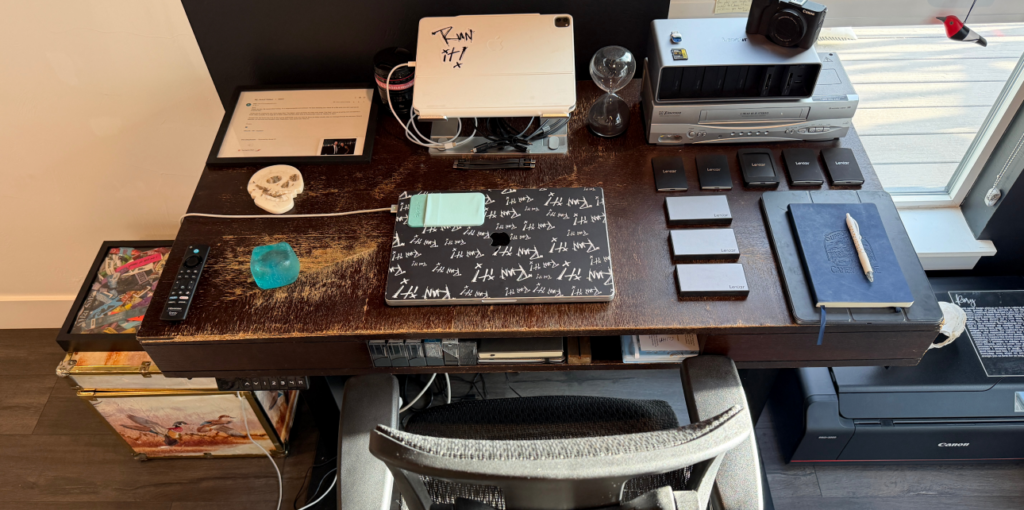
At the end of each shooting day, Kramer moves footage from the CFe card or SD card onto an external hard drive at the hotel (or wherever he’s staying). Once home from the shoot, everything is organized into a master hard drive, with a full backup drive mirroring it to act as insurance against a fire, a dropped drive, or any other worst-case scenario.
Once final images and videos are selected, he mirrors those final folders to Dropbox to quickly share proofs or deliverables with clients and artists.
The goal, as Kramer puts it, is being able to locate any file years later without having to dig. It’s the same structure, every time, on every drive.
Protecting the Moment, Every Time
That same discipline carries into Kramer’s music photography work. Touring with acts like Blink-182 taught him to treat every show like a plan-and-adapt exercise: learning the setlist, anticipating pyrotechnic or crowd moments, and deliberately shooting familiar beats from new angles night after night.
Whether he’s photographing wildlife in total silence or a stadium show mid-pyro, Rory’s approach is the same: prepare for the moment, protect the file the second it’s captured, and use the right tech to make sure a once-in-a-lifetime shot lives on forever.