


Most people think of harsh conditions as dramatic scenarios — arctic expeditions or desert safaris. But the truth is, memory cards face challenging environments every day. A camera left in a hot car reaches 140°F within hours. Construction sites expose equipment to constant vibration and dust. Marine photographers deal with salt spray and humidity that can corrode electronics in days.
Standard consumer memory cards, unlike Lexar memory cards, are typically designed for controlled environments — air-conditioned homes, stable temperatures, and minimal physical stress. They use plastic housings that become brittle in cold weather and warp in heat. The internal components aren’t protected against moisture infiltration, and their controllers can malfunction when exposed to electromagnetic interference common in industrial settings.
Temperature extremes affect memory cards in ways most users never consider. At high temperatures, the plastic housing softens and can deform, creating poor connections with camera contacts. The NAND flash memory itself becomes less reliable, with increased error rates and potential data corruption. Write speeds often decrease significantly as the controller thermal-throttles to prevent damage.
Cold temperatures present different challenges. Plastic becomes brittle and prone to cracking. Condensation forms when moving equipment between temperature zones, potentially causing short circuits. The chemical processes within flash memory cells slow down, leading to read/write errors and extended access times.
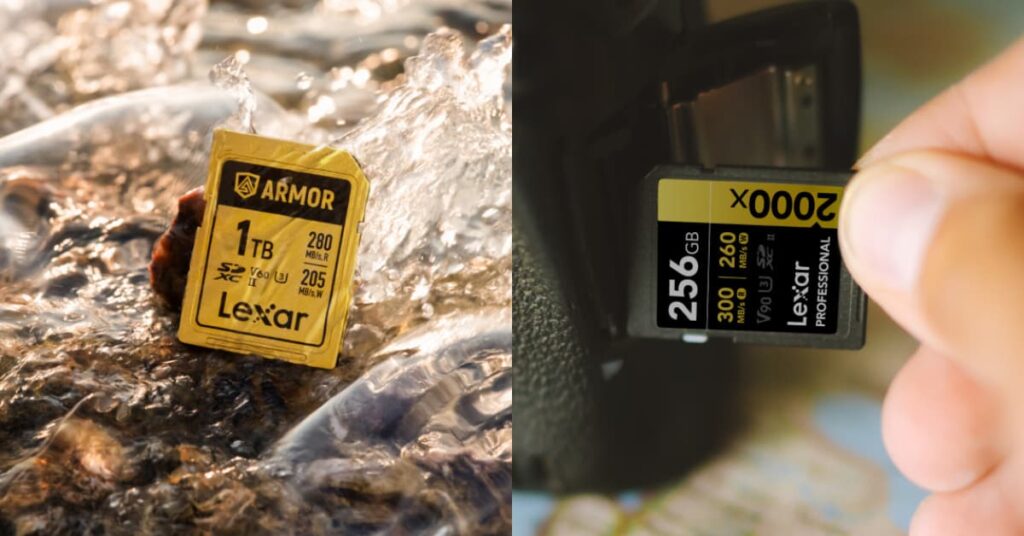
Lexar® Professional 2000x SDHC™/SDXC™ UHS-II Card GOLD Series addresses these challenges through advanced engineering. These cards operate reliably in temperatures from 32°F to 158°F (0°C to 70°C) and survive non-operating temperatures from -13°F to 185°F (-25°C to 85°C). This temperature tolerance enables reliable operation in environments that would destroy standard memory cards.
Professional environments expose memory cards to constant vibration — construction equipment, vehicle-mounted cameras, industrial machinery. These ongoing stresses can gradually damage internal connections and cause intermittent failures that are difficult to diagnose.
Lexar professional memory cards undergo rigorous testing to ensure reliability under extreme conditions. The Lexar® Professional 2000x SDHC™/SDXC™ UHS-II Card GOLD Series is engineered to be shock resistant (200G for 3ms, 150G for 10ms) and vibration proof (10Hz to 2000 Hz, 6Grms).
Environmental Hazards: Water, Dust, and Contamination
Professional photography and filming often occurs in environments with physical hazards. Beach shoots expose equipment to salt spray and sand. Industrial settings involve metal particles and chemical vapors. Research expeditions encounter rain, snow, and humidity that can penetrate standard memory cards.
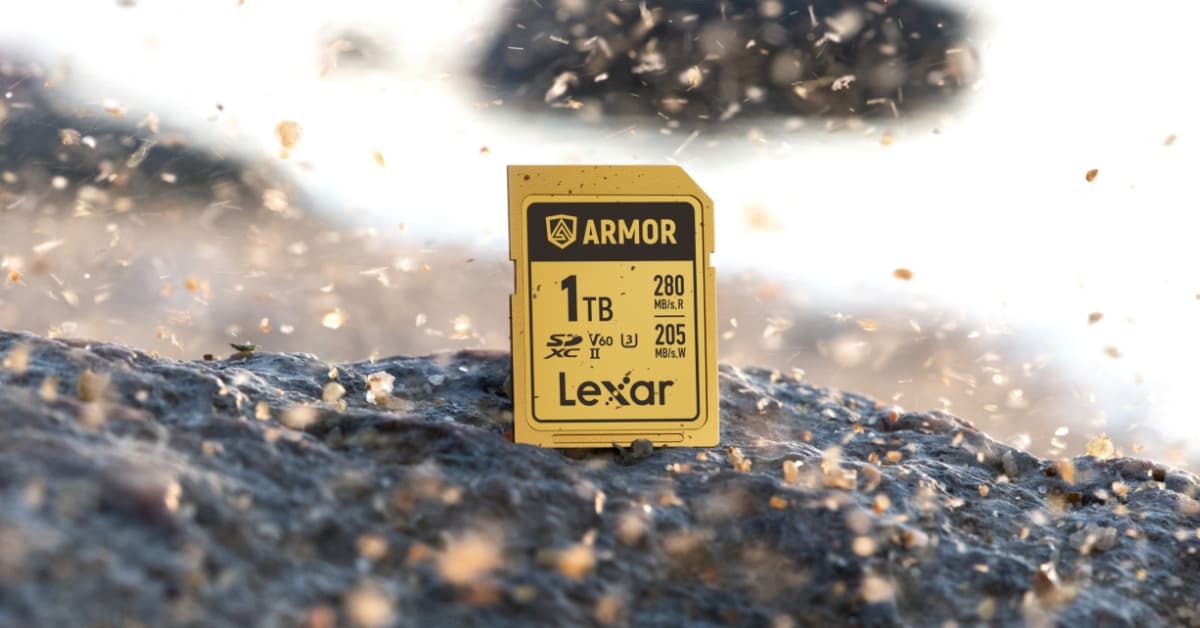
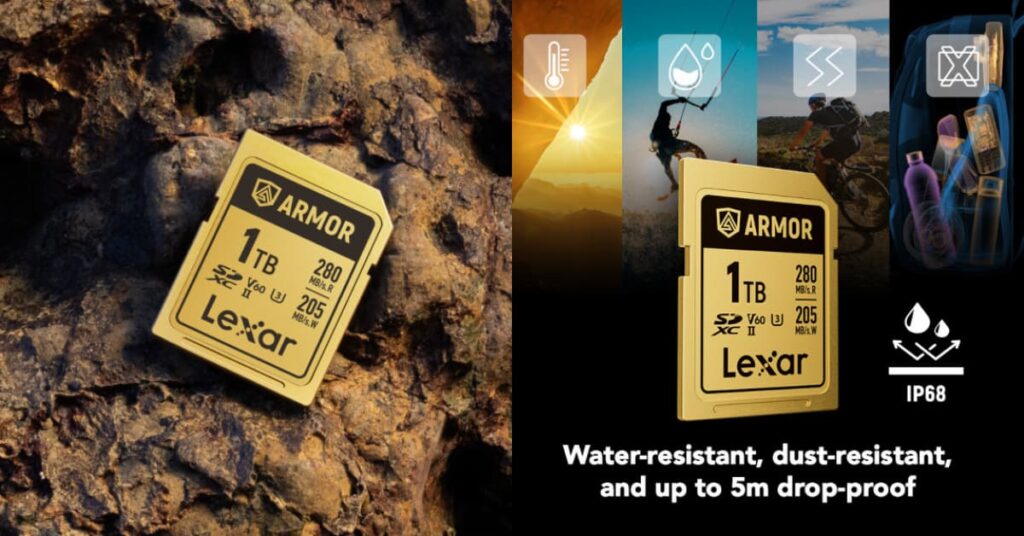
The revolutionary Lexar® ARMOR GOLD SDXC™ UHS-II Card sets new standards for environmental protection. Using stainless steel construction instead of traditional plastic, these cards achieve IP68 water and dust resistance, meaning complete protection against dust ingress and ability to withstand immersion beyond one meter. The steel construction also provides superior resistance to corrosion, static electricity, and electromagnetic interference.

Engineering Durable Lexar Memory: The Technical Challenge
Creating truly durable memory involves solving complex engineering challenges. Engineers must protect sensitive electronic components while maintaining the precise tolerances required for standard memory card slots. They need to ensure reliable electrical connections despite physical stress and environmental exposure. Most importantly, engineers must achieve all this without compromising the high-speed performance that modern applications demand.
Material Science: Beyond Plastic Construction
Traditional memory cards use plastic housings because they’re lightweight, inexpensive, and easy to manufacture. However, plastic has fundamental limitations for durable applications. Plastic iss susceptible to temperature extremes, can crack under stress, and provides limited protection against environmental hazards.
The breakthrough Lexar® ARMOR GOLD SDXC™ UHS-II Card represents a paradigm shift in Lexar memory card construction. By utilizing stainless steel instead of plastic, Lexar created a memory card that’s 37 times stronger than traditional designs. This isn’t simply about impact resistance — stainless steel provides superior thermal conductivity for heat dissipation, excellent corrosion resistance for harsh environments, and inherent electromagnetic shielding that improves signal integrity.
The engineering challenge involved creating stainless steel cards that meet strict thickness requirements set by the SD Association. Despite using metal construction, these cards maintain the standard 2.1mm thickness and remain compatible with all SD card slots. This required precise manufacturing techniques and innovative internal component layout to achieve the same form factor with dramatically improved durability.
Sealing and Protection: Achieving IP Ratings
Ingress protection (IP) ratings define a device’s resistance to dust and water intrusion. Achieving high IP ratings requires sophisticated sealing techniques and careful attention to potential ingress points. Memory cards present unique challenges because they must maintain electrical contact while preventing environmental contamination.
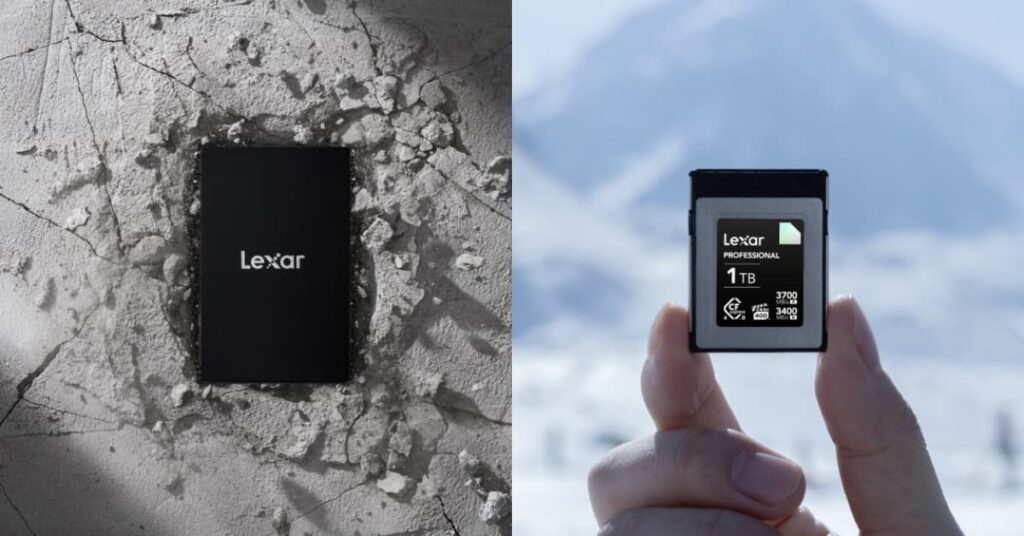
The Lexar® ARMOR 700 Portable SSD demonstrates advanced sealing technology with its IP66 rating. This certification means complete protection against dust ingress and protection against powerful water jets from any direction. The drive can withstand 3-meter drops while maintaining its environmental sealing, crucial for professional applications where equipment faces both physical and environmental stress.
The sealing process involves multiple barriers and careful material selection. Gaskets and seals must remain flexible across wide temperature ranges while maintaining their protective properties. Internal components require additional protection through conformal coatings and moisture barriers that don’t interfere with electrical performance.
Controller Design: Maintaining Performance Under Stress
The memory controller acts as the brain of any storage device, managing data operations and ensuring reliable performance. Durable memory controllers must maintain consistent operation despite temperature variations, electromagnetic interference, and power fluctuations common in harsh environments.
Professional-grade memory like our Lexar® Professional CFexpress™ Type B Card DIAMOND Series incorporates advanced controller technology designed for extreme conditions. These controllers implement sophisticated error correction codes (ECC) that can recover from data errors caused by environmental stress. Temperature compensation algorithms adjust operating parameters to maintain performance across wide temperature ranges.
The controllers also implement advanced wear leveling and over-provisioning strategies that account for the additional stress imposed by harsh operating conditions. This ensures reliable operation and data integrity even when memory cells experience accelerated aging due to environmental exposure.
Real-World Applications: Where Durable Lexar Memory Makes the Difference
Understanding the technical aspects of durable memory becomes most meaningful when examining real-world applications where standard memory simply cannot survive. These scenarios demonstrate why professionals invest in premium durable Lexar memory solutions and why reliability often outweighs cost considerations.
Professional Photography in Extreme Environments
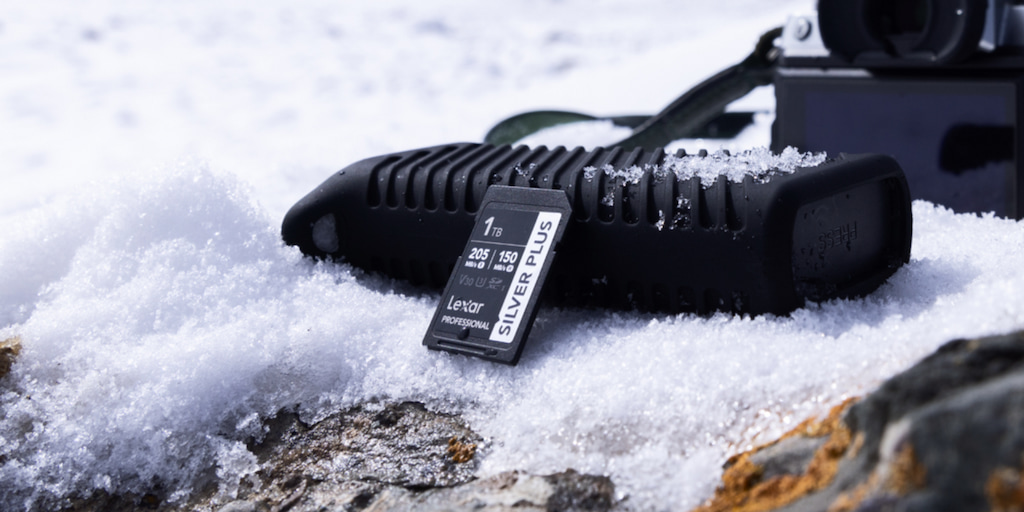
Wildlife photographers often work in conditions that would destroy standard equipment. Arctic photography involves temperatures well below freezing, constant moisture from snow and ice, and equipment that must function reliably despite thermal cycling.
Desert photography presents opposite challenges — extreme heat, abrasive sand particles, and intense UV radiation that can degrade plastic components.Wedding photographers face different but equally demanding conditions. Outdoor ceremonies expose equipment to temperature variations, humidity, and potential precipitation.
The Lexar® Professional 2000x SDHC™/SDXC™ UHS-II Card GOLD Series provides the reliability these professionals demand. With read speeds up to 300MB/s and write speeds up to 260MB/s, these cards handle rapid burst shooting and high-resolution video recording. More importantly, their ability to operate reliably from -13°F to 185°F (-25°C to 85°C) ensures consistent performance regardless of environmental conditions.
Professional photographer Sarah Chen recently shared how Lexar durable memory saved a critical assignment:
“I was documenting glacier research in Alaska, where temperatures dropped to -20°F. Standard memory cards I’d used previously became sluggish and eventually stopped working. The Lexar Professional 2000x cards continued performing flawlessly, capturing time-lapse sequences and high-resolution stills without a single failure.”
Industrial and Scientific Applications
Industrial environments present unique challenges for memory storage. Manufacturing facilities involve constant vibration from machinery, temperature variations from industrial processes, and exposure to metal particles and chemical vapors. Quality control systems and automated inspection equipment require reliable data storage that functions consistently despite these harsh conditions.
Scientific research often occurs in extreme environments — from deep-sea exploration to atmospheric research. Equipment must function reliably in conditions far beyond normal consumer use while providing the high-speed data transfer necessary for sophisticated instrumentation.
Our Lexar® ARMOR 700 Portable SSD excels in these demanding applications. With IP66 water and dust resistance, 3-meter drop protection, and consistent 2000MB/s read/write performance, it provides the reliability and speed that industrial and scientific applications require. The aluminum core construction with protective silicone coating ensures durability while maintaining excellent thermal management for sustained high-performance operation.
Content Creation in Challenging Locations
Modern content creation frequently involves filming in challenging locations where equipment reliability is paramount. Adventure filmmakers document extreme sports in harsh environments. Documentary crews work in remote locations without access to equipment replacement. Travel content creators must ensure their storage solutions can handle diverse environmental conditions and transportation stress.
The Lexar® Professional CFexpress™ Type B Card DIAMOND Series addresses these challenges with exceptional performance and durability. Designed for professional filmmakers and content creators, it delivers read speeds up to 1900MB/s and write speeds up to 1700MB/s, enabling smooth capture of RAW 4K, 6K, and 8K video. The card’s rugged construction withstands shock, vibration, and extreme temperatures while maintaining consistent high-performance operation.
Mobile and Field Computing
Mobile computing applications — from rugged tablets used in construction to portable workstations for field research — require storage solutions that match their environmental capabilities. These devices often operate in vehicles, outdoor environments, and industrial settings where standard storage components would fail.
The Lexar® ARMOR GOLD SDXC™ UHS-II Card represents the ultimate solution for mobile computing applications requiring maximum durability. Its stainless steel construction provides 37 times the strength of standard plastic cards while maintaining full compatibility with existing SD card slots. IP68 water and dust resistance ensures reliable operation in virtually any environment, while high-speed UHS-II performance supports demanding applications.
Testing and Validation: Ensuring Real-World Reliability
Durable memory claims mean nothing without rigorous testing and validation.
Professional-grade Lexar memory products undergo extensive testing regimes that simulate and often exceed real-world conditions. Understanding these testing protocols helps explain why premium durable memory solutions command higher prices and why they deliver superior reliability in demanding applications.
Environmental Testing: Beyond Standard Specifications
Standard consumer memory cards undergo basic testing to ensure they meet minimum specifications. Durable memory products require much more extensive environmental testing to validate their ability to function in extreme conditions. This testing involves controlled exposure to temperature extremes, humidity cycling, salt spray, and various chemical environments.
Temperature testing for products like our Lexar® Professional 2000x SDHC™/SDXC™ UHS-II Card GOLD Series involves extended operation at both temperature extremes as well as rapid thermal cycling to simulate real-world conditions. Cards must maintain full performance specifications at 158°F (70°C) operating temperature and survive exposure to 185°F (85°C) without damage or data loss.
The testing also includes thermal shock procedures where cards experience rapid temperature transitions — simulating scenarios like moving equipment from air-conditioned environments to hot vehicles or cold outdoor conditions. These tests validate that the memory cards maintain reliable electrical connections and data integrity despite thermal expansion and contraction of materials.
Mechanical Stress Testing: Validating Durability Claims
Mechanical testing validates memory card durability under physical stress conditions. This includes shock testing to specified G-force levels, vibration testing across frequency ranges that simulate real-world conditions, and bend testing to ensure cards maintain functionality despite flexural stress.
Our Lexar® Professional 2000x SDHC™/SDXC™ UHS-II Card GOLD Series undergoes shock testing to 200G for 3ms and 150G for 10ms in three orthogonal directions. This exceeds the shock levels experienced in most real-world scenarios, providing confidence that the cards will continue functioning despite accidental drops or impacts.
Vibration testing subjects cards to sinusoidal vibration from 10Hz to 2000Hz at 6Grms amplitude. This testing simulates the vibration environment in vehicles, aircraft, and industrial equipment to ensure reliable operation in mobile and industrial applications. The testing duration often extends for hours to validate long-term reliability under constant vibration exposure.
Performance Consistency Testing: Maintaining Speed Under Stress
Durable memory must maintain consistent performance despite environmental stress. Testing protocols validate that cards continue delivering specified read/write speeds and latency characteristics across their entire operating temperature range and throughout their operational lifetime despite environmental exposure.
Performance testing involves sustained operation under various environmental conditions while continuously monitoring data transfer rates, error rates, and response times. This ensures that cards like our Lexar® ARMOR GOLD SDXC™ UHS-II Card maintain their specified performance characteristics whether operating in desert heat or arctic cold.
Endurance testing simulates years of operation under accelerated conditions to validate long-term reliability. This testing helps ensure that durable memory solutions continue performing reliably throughout their intended service life, even when exposed to harsh environmental conditions that would quickly degrade standard memory products.
Quality Labs: The Lexar Advantage
All Lexar products undergo extensive testing in the Lexar Quality Labs — specialized facilities equipped with thousands of different cameras and digital devices to ensure performance, quality, compatibility, and reliability across diverse hardware configurations.
These labs simulate real-world usage scenarios with actual cameras, computers, and other devices that customers use. This approach identifies compatibility issues and performance characteristics that might not appear in standardized testing procedures. The comprehensive testing ensures that Lexar durable memory products deliver consistent, reliable performance across the vast ecosystem of compatible devices.
The Lexar Quality Labs also conduct accelerated aging tests that simulate years of operation in compressed timeframes. This testing validates that our durable memory products maintain their performance and reliability characteristics throughout their intended service life, providing customers with confidence in their long-term investment.
Choosing the Right Durable Memory Solution
Understanding durable memory technology and testing procedures provides the foundation for making informed purchasing decisions. Different applications require different levels of durability and performance, and choosing the optimal solution involves balancing requirements, budget, and intended use scenarios.
Assessing Your Environmental Requirements
The first step in selecting durable memory involves honestly assessing the environmental conditions your equipment will encounter. Indoor studio photography requires far less environmental protection than outdoor wildlife documentation. Understanding your specific requirements helps avoid over-specifying (and overpaying for) capabilities you don’t need while ensuring adequate protection for your actual use cases.
For extreme environments involving temperature extremes, moisture exposure, or physical stress, products like the Lexar® ARMOR GOLD SDXC™ UHS-II Card provide maximum protection through stainless steel construction and IP68 environmental sealing. For less demanding but still challenging conditions, our Lexar® Professional 2000x SDHC™/SDXC™ UHS-II Card GOLD Series offers excellent durability with proven temperature, shock, and vibration resistance.
Consider not just obvious environmental factors but also transportation and storage conditions. Equipment shipped to remote locations experiences shipping stress, temperature variations, and handling that can damage inadequately protected memory. Memory cards stored in vehicles experience extreme temperature cycling and vibration that gradually degrades standard products.
Performance Requirements vs. Durability Features
Durable memory solutions must balance environmental protection with performance requirements. Higher-capacity, faster memory cards often involve more complex internal architectures that can be more susceptible to environmental stress. Understanding your performance requirements helps select solutions that provide adequate durability without unnecessary complexity.
For applications requiring maximum performance – such as 8K video recording or high-speed burst photography — products like the Lexar® Professional CFexpress™ Type B Card DIAMOND Series provide both exceptional speed (up to 1900MB/s read, 1700MB/s write) and robust environmental protection. For applications where moderate performance suffices, more cost-effective durable memory solutions may provide adequate capabilities.
Consider future requirements as well as current needs. Professional workflows often evolve toward higher resolution, faster frame rates, and more demanding performance requirements. Selecting durable memory with performance headroom ensures your investment remains viable as your requirements evolve.
Form Factor and Compatibility Considerations
Durable memory solutions must maintain compatibility with existing equipment while providing enhanced environmental protection. This compatibility requirement constrains design options and sometimes requires engineering compromises between protection and form factor compliance.
The breakthrough Lexar® ARMOR GOLD SDXC™ UHS-II Card demonstrates how innovative engineering can overcome these constraints. Despite using stainless steel construction, these cards maintain standard SD card dimensions and thickness while providing dramatically enhanced durability. This ensures compatibility with existing cameras and card readers while delivering unprecedented protection.
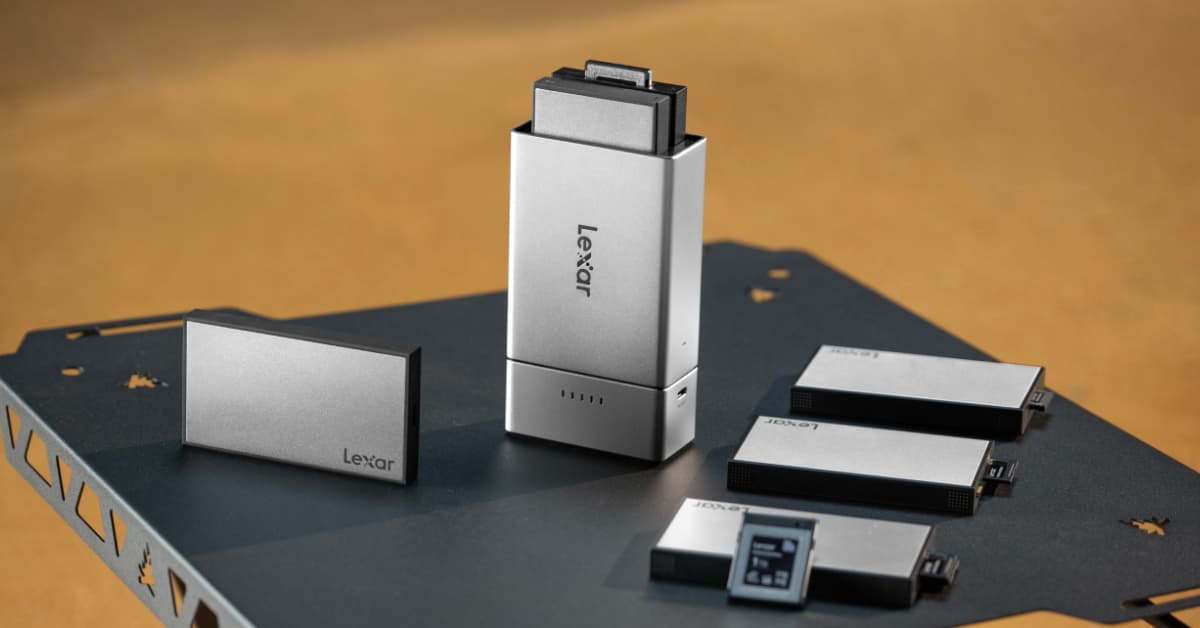
For portable storage applications, form factor considerations extend beyond card slots to include handling, transportation, and mounting requirements. The Lexar® ARMOR 700 Portable SSD provides a compact form factor with integrated protection that eliminates the need for separate protective cases while maintaining excellent ergonomics for field use.
Cost-Benefit Analysis: When Durability Justifies Premium Pricing
Durable memory solutions typically command premium pricing compared to standard consumer products. Justifying this investment requires considering not just the incremental cost but the potential consequences of memory failure in critical applications.
For professional applications where memory failure could result in lost revenue, reshoot costs, or irreplaceable content loss, the premium for durable memory represents essential insurance. Wedding photographers, for example, can’t reshoot failed captures, making reliable memory cards essential business tools rather than optional upgrades.
Commercial and industrial applications often involve even higher stakes. Production line documentation, quality control records, and safety compliance data must be captured reliably regardless of environmental conditions. The cost of durable memory becomes negligible compared to the potential costs of data loss or regulatory non-compliance.
Consider also the total cost of ownership, including replacement frequency and operational reliability. Durable memory solutions often provide longer service life and more predictable operation, reducing both replacement costs and the hidden costs associated with unreliable equipment.
The Future of Durable Memory Technology
After examining the sophisticated engineering behind today’s durable memory solutions, from the breakthrough Lexar® ARMOR GOLD SDXC™ UHS-II Card with its revolutionary stainless steel construction to the rugged Lexar® ARMOR 700 Portable SSD with its IP66 environmental protection, it’s clear that durable memory has evolved far beyond simple protective housings.
The journey from understanding fundamental challenges to examining innovative solutions reveals the remarkable engineering achievements that make today’s durable memory possible. When memory cards can survive 200G shock impacts while maintaining microsecond access times, or operate reliably from -25°C to 85°C while delivering 300MB/s transfer speeds, we’re witnessing technology that seemed impossible just decades ago.
The confidence that comes from knowing your Lexar® Professional CFexpress™ Type B Card DIAMOND Series will capture 8K RAW video reliably in a scorching desert or freezing arctic environment opens creative and professional opportunities that would be unthinkable with less robust solutions.
Emerging Technologies and Materials
The future of durable memory lies in continued materials science advancement and innovative protection techniques. Research into advanced ceramic materials, graphene-enhanced plastics, and novel metal alloys promises even better protection while potentially reducing weight and manufacturing costs. These materials could enable memory solutions that are virtually indestructible while maintaining the compact form factors that modern applications demand.
Nanotechnology offers possibilities for self-healing materials that can repair minor damage automatically, and smart materials that adapt their properties based on environmental conditions. Imagine memory cards that become more impact-resistant when they detect acceleration forces, or automatically adjust their thermal characteristics based on ambient temperature.
Integration and System-Level Protection
In the future, durable memory solutions may integrate more closely with host devices, providing system-level protection rather than just component-level durability. This could include real-time health monitoring that predicts failures before they occur, automatic data backup and redundancy systems that ensure data survival even if individual memory components fail, and dynamic performance optimization that maintains consistent operation despite environmental stress.
The convergence of artificial intelligence and storage technology opens possibilities for memory systems that learn from usage patterns and environmental conditions, automatically adjusting their operation to maximize reliability and performance in specific applications.
Expanding Applications and Requirements
As applications become more demanding and deployment environments more challenging, the requirements for durable memory will continue evolving. Autonomous vehicles, space exploration, deep-sea research, and industrial IoT applications all demand storage solutions that can operate reliably in conditions that would challenge today’s most durable memory products.
The growing importance of edge computing in harsh environments — from oil drilling platforms to arctic research stations – requires storage solutions that combine extreme durability with high performance and intelligent data management capabilities. These applications will drive continued innovation in durable memory technology.
Making Informed Decisions in a Changing Landscape
Understanding the engineering principles behind durable memory technology – from material selection and environmental sealing to controller design and validation testing – empowers users to make informed decisions about their storage requirements. Whether choosing the ultimate protection of our Lexar® ARMOR GOLD SDXC™ UHS-II Card for extreme environments, the balanced capabilities of our Lexar® Professional 2000x SDHC™/SDXC™ UHS-II Card GOLD Series for professional applications, or the portable durability of our Lexar® ARMOR 700 Portable SSD for mobile workflows, the decision should be based on understanding rather than speculation.
The investment in durable memory technology pays dividends not just in equipment reliability but in professional confidence and creative freedom. When you know your memory solutions will perform reliably regardless of conditions, you can focus on capturing the perfect shot, documenting critical processes, or creating compelling content without worrying about equipment failure.