


Stop us if this sounds familiar: You’re laying down a complex arrangement with 40+ tracks, virtual instruments loading samples in real-time, and suddenly your digital audio workstation (DAW) starts stuttering. The creative flow stops dead as you wait for buffers to catch up, samples to stream, and your computer to remember what you were trying to accomplish.
Music projects can have large files, samples, virtual instruments, and audio recordings that need considerable space, and if you don’t have enough space in your storage for music production, your projects might slow down, freeze, or crash. But it’s not just about capacity — it’s about speed, reliability, and understanding how different storage technologies impact your specific workflow.
Your storage choice affects everything from initial sample loading to final mixdown rendering. A slow drive doesn’t just mean longer wait times — it limits how many virtual instruments you can run simultaneously, how large your sample libraries can be, and ultimately, how complex your productions can become.
Storage Technologies That Actually Matter for Audio Production
Let’s cut through the marketing noise and focus on what really impacts your daily production workflow. There are three main storage technologies you need to understand:
Solid State Drives (SSDs): Your Speed Foundation
SSDs have become the production standard for good reason. SATA SSDs often have a top theoretical speed of roughly 550MB/s, which translates to dramatically faster sample loading, project opening, and virtual instrument streaming compared to traditional hard drives.
For music production specifically, SSDs provide:
- Instant access to sample libraries without lag
- Smooth streaming of multiple virtual instruments
- Faster project loading and saving
- Silent operation during critical listening sessions
- Better reliability for protecting your creative work
NVMe Drives: When Speed Becomes Critical
NVMe drives objectively outperform their SATA counterparts with sequential speeds up to 14 times faster. But here’s the crucial question: Does this translate to real-world benefits for audio production?
For sample drives, SATA-based SSD drives are more than fast enough and have larger drive options, according to professional audio engineers. However, NVMe does help background loading of samples, which can be beneficial for complex projects with extensive sample libraries.
Sizing Your Storage for Music Production Needs in the Real World
“How much storage do I need?” is a question with a surprisingly complex answer that depends on your production style, sample library size, and future plans.
Minimum Viable Setup: 1TB-2TB
A 1TB or 2TB SSD is the recommended storage size for most music producers, offering a good balance between storage and affordability. This capacity handles:
- Your operating system and DAW installation
- A substantial collection of virtual instruments
- 20-30 active projects with full stems
- Room for growth and experimentation
Professional-Level Requirements: 2TB-4TB+
For serious producers working with high-resolution audio, extensive sample libraries, or client work, storage needs scale quickly. A beat collection can reach 1TB before adding your finished projects, and that’s just the beginning.
Consider this breakdown for professional storage allocation:
- System Drive (500GB-1TB): Operating system, DAW, essential plugins
- Active Projects Drive (1TB-2TB): Current projects, frequently-used samples
- Sample Library Drive (2TB-4TB): Full sample collections, virtual instrument libraries
- Archive Drive (4TB-8TB): Completed projects, backup copies, long-term storage

Optimizing Your Storage Configuration for Maximum Performance
Simply having fast storage isn’t enough — how you configure and use it makes the difference between smooth sessions and frustrating bottlenecks.
The Multi-Drive Approach
Using a separate working drive for audio files moves the workload off the computer’s internal drive and improves read/write efficiency. This separation prevents your operating system from competing with audio streaming for drive bandwidth.
Smart File Organization Strategies
Professional producers organize their storage around workflow efficiency:
- Keep active projects on your fastest SSD
- Store sample libraries on a dedicated high-capacity drive
- Use external drives for collaboration and project portability
- Implement regular backup routines to protect against data loss
External vs. Internal: Making the Right Choice
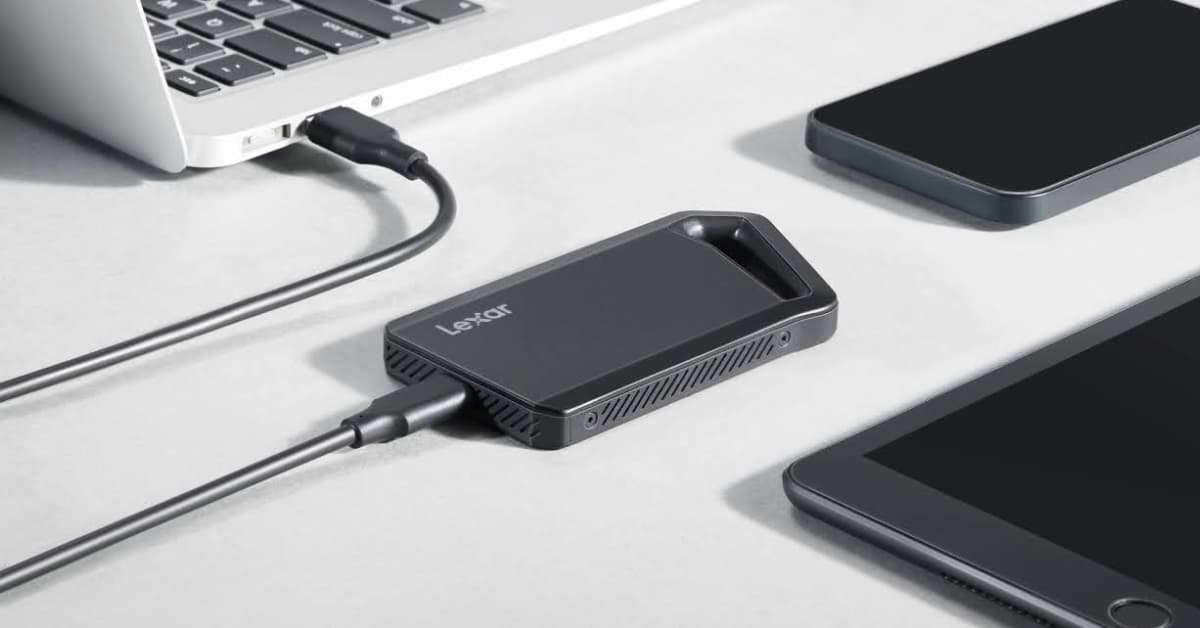
External SSDs are an excellent choice for music production, providing the same benefits as internal ones with added convenience. They offer flexibility for working across multiple systems, easy capacity expansion, and simplified backup workflows.
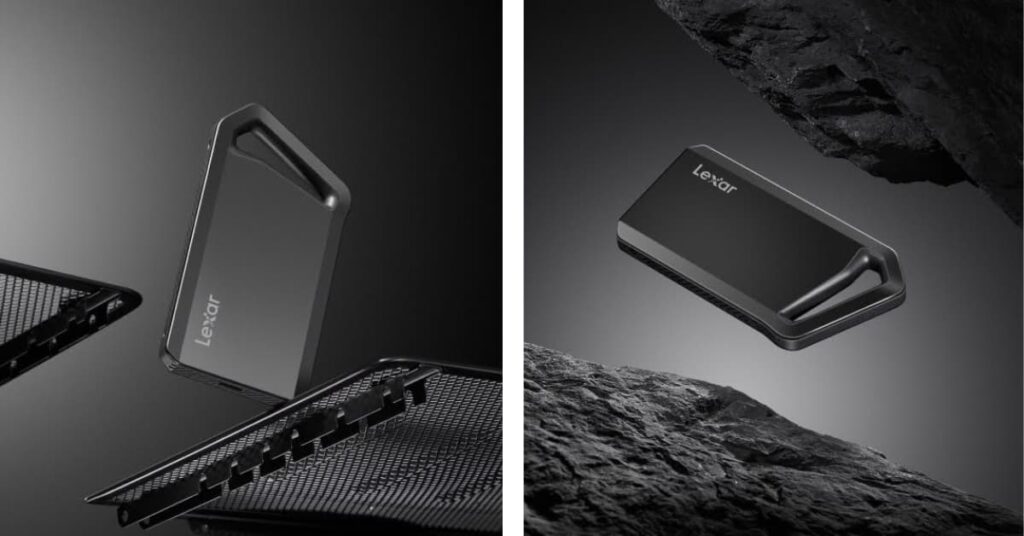
For maximum performance, aim for a PCIe/NVMe-based external SSD to ensure maximum speed and reliability. Modern external SSDs like those in the Lexar® Professional series deliver professional-grade performance in portable packages, providing the speed and reliability that serious producers require without compromise.
The Lexar® Professional SL600 Portable SSD, for instance, offers up to 2000MB/s read speeds through USB 3.2 Gen 2×2, making it ideal for producers who need to access large sample libraries instantly, regardless of location.

Professional Storage Solutions That Deliver Results
When your livelihood depends on reliable, high-performance storage, compromise isn’t an option. Professional-grade storage solutions offer the speed, reliability, and features that serious producers require.
High-Performance Portable Solutions
The Lexar® Professional Go Portable SSD with Hub represents the evolution of mobile production storage, combining up to 1050MB/s speeds with integrated connectivity. This isn’t just storage — it’s a complete mobile workstation enabler that keeps your workflow moving whether you’re in the studio, at a client location, or collaborating remotely.
For producers who demand maximum efficiency and reliability, the Lexar® Professional SL500 Portable SSD delivers exceptional performance with read speeds up to 2000MB/s via USB 3.2 Gen 2×2. We’ve seen how this level of performance transforms complex production workflows, eliminating the bottlenecks that constrain creativity.
Memory Cards for Mobile Recording
Don’t overlook the importance of reliable memory cards for portable recording setups. The Lexar® Professional 1066x SDXC™ UHS-I Card SILVER Series provides the speed and reliability needed for field recording, ensuring your mobile sessions maintain the same professional standards as your studio work.
Enterprise-Grade Reliability
For mission-critical applications, we recommend looking for storage solutions with:
- Wear leveling and error correction
- Thermal management for sustained performance
- Professional warranty coverage
- Proven track record in demanding environments
The Lexar® Professional series exemplifies these qualities, offering the reliability that has made Lexar a trusted name among creative professionals worldwide.
Future-Proofing Your Storage Investment
Technology evolves rapidly, but smart storage choices can serve your production needs for years to come. Consider these forward-looking factors:
Interface Evolution
USB4 and Thunderbolt 4 are becoming standard, offering even faster transfer speeds and better compatibility. Investing in storage with modern connectivity ensures compatibility with future systems.
Capacity Growth Patterns
Virtual instruments are incorporating high-quality samples, with single instruments easily reaching 100GB. Plan for this growth by choosing scalable storage solutions rather than barely adequate capacity.
Workflow Integration
Modern storage solutions integrate with cloud services, collaboration platforms, and backup systems. Choose solutions that enhance your entire production ecosystem, not just local storage capacity.

Making Your Storage Decision: A Strategic Framework
Your storage choice should align with your production style, technical requirements, and growth plans. We’ve developed this framework to help you make the right decision:
Assess Your Current Workflow
- How many simultaneous tracks do you typically work with?
- What’s your average project file size?
- How often do you collaborate or need portable access?
Calculate Your Performance Requirements
- Do you experience current bottlenecks during complex sessions?
- Are you limited by storage speed or capacity?
- What’s your budget for performance improvements?
Plan for Growth
- Where will your production work be in two years?
- What new technologies or techniques do you want to explore?
- How important is future-proofing versus immediate cost savings?
The right storage configuration transforms your entire production experience. No more waiting for samples to load, no more project crashes from insufficient space, no more creative momentum lost to technical limitations.
Whether you’re upgrading from an aging HDD setup or optimizing an existing SSD configuration, the impact on your daily workflow will be immediate and lasting. Your storage should be invisible when it’s working correctly — seamlessly enabling your creativity rather than constraining it.
Professional storage solutions like the Lexar® Professional line deliver the reliability and performance that serious producers demand. From the versatile Lexar® Professional Go Portable SSD with Hub for mobile workflows to the high-speed Lexar® Professional SL500 Portable SSD for demanding studio applications, we’ve built our reputation on providing the tools that creative professionals trust.
Stop letting storage limitations define what’s possible in your productions. The right storage setup doesn’t just support your current workflow — it enables the ambitious projects you haven’t even imagined yet.