


The best microSD cards for drone and action cameras are about whether your card can keep pace with the camera’s actual data demands without dropping a single frame of 8K footage. If you’ve ever had a recording cut mid-flight, or come home with corrupted clips from your Insta360 Ace Pro 2 or X5, you already know the card choice matters more than people realize.
We put together this guide specifically for Insta360 creators, whether you’re flying the Antigravity A1, shooting immersive 360 footage with the X5, or capturing action-cam content with the Ace Pro 2. Here’s exactly which microSD cards fit these devices, what specs actually matter, and which Lexar options hit the right balance of performance, durability, and compatibility.
Why Your microSD Card Choice Determines Your Shot Quality
Here’s something a lot of creators get wrong. They spend top dollar on a capable camera, then pair it with a card that’s technically rated fast enough on the box but fails under sustained 8K workloads. The box speed is the peak. The sustained write speed (the speed the card holds during long recording sessions) is what actually determines whether you get clean footage or a corrupted file.
For 8K 30fps recording, you’re writing data at a rate of roughly 21MB/s-25MB/s continuously. That’s not a momentary burst; it’s the card holding that throughput for the entire duration of your flight or session. A card that dips below its rated write speed under thermal stress or sustained load will cause recording interruptions. This is why the V30 Video Speed Class rating exists: it guarantees a minimum sustained write speed of 30MB/s, giving your 8K data a reliable buffer.
The second issue creators hit: using a UHS-II or UHS-III card in a UHS-I camera slot. All three Insta360 devices covered in this guide (the Antigravity A1 drone, the Ace Pro 2, and the X5) use UHS-I microSD slots. A UHS-II card has an extra row of contacts the slot can’t read. Rather than getting UHS-II speeds, the card drops to a fraction of its rated speed and, in some cases, causes write instability and recording failures. Stick with UHS-I.
What is UHS-II?
Ultra High Speed Phase II (UHS-II) is a bus interface standard for SD cards that increases data transfer speeds by adding a second row of pins. It uses the same SD card for factor, but with a much faster interface (if your device supports it).
UHS-II can reach theoretical speeds up to 312MB/s, making it ideal for high-bitrate 4K/8K video, rapid burst photography, and fast file transfers. This performance becomes particularly useful during offloads. UHS-II cards are backward compatible with UHS-I devices, but they’ll drop to slower speeds if the device doesn’t support the extra pins.
You can usually identify a UHS-II card by the second row of gold contacts on the back..
Insta360 microSD Requirements: All Three Devices at a Glance
Each of these cameras has the same core storage requirements, which simplifies your buying decision considerably.
- Bus interface: UHS-I (do not use UHS-II or UHS-III)
- Video Speed Class: V30 or higher
- File format: exFAT
- Maximum capacity: 1TB (cards above 1TB are not compatible)
- Recommended minimum capacity: 128GB – though 256GB or 512GB is the practical choice for 8K sessions
One capacity note worth knowing: higher-capacity microSD cards from the same product line typically carry higher write speeds. A 512GB or 1TB card in the Lexar SILVER PLUS lineup writes at up to 150MB/s, while the 64GB version writes at up to 100MB/s. If you’re shooting 8K consistently, go 256GB or higher.
The Antigravity A1: 8K 360° From the Sky
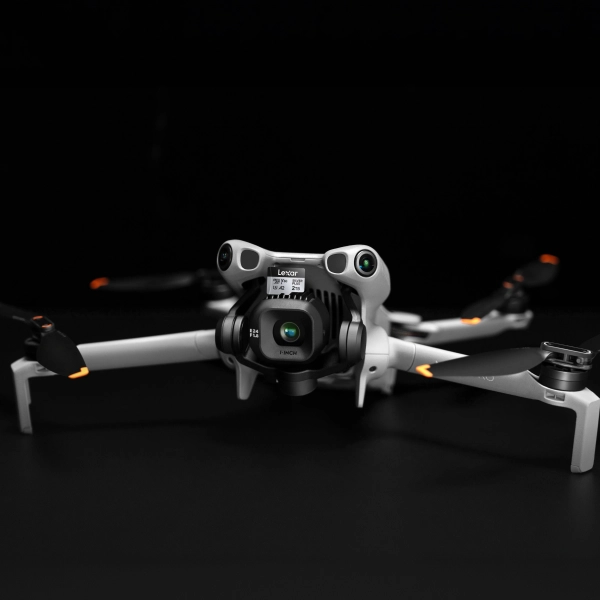
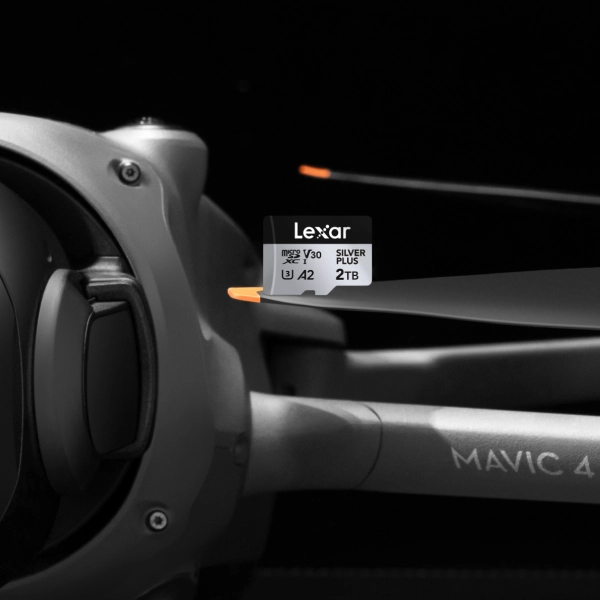
The Antigravity A1 is Insta360’s entry into the drone market – a 249g aircraft co-engineered with Insta360 that films 8K 360° video with dual fisheye lenses. At a maximum video bitrate of 170Mbps, it requires a card that can write approximately 21MB per second without wavering, for the entire duration of a flight.
There’s no margin for card speed inconsistency mid-air. A dropped frame at 200 feet is a corrupted memory, not just an inconvenience.
The Lexar® Professional SILVER PLUS microSDXC™ UHS-I Card is the card we point Antigravity A1 pilots toward. It’s UHS-I, V30 rated, and available in capacities up to 1TB are exactly within the Antigravity’s supported range. The 512GB version offers up to 205MB/s read and 150MB/s write speeds, with a sustained floor backed by the V30 rating that exceeds the drone’s 21 MB/s write requirement by a wide margin.
A 20 to 25 minute flight at 8K 360° generates roughly 20GB-35GB of footage. The 256GB capacity is a practical minimum for a full day of flying; 512GB lets you stay in the air longer without worrying about mid-session card swaps.
The Insta360 Ace Pro 2: 8K AI Action, Every Environment
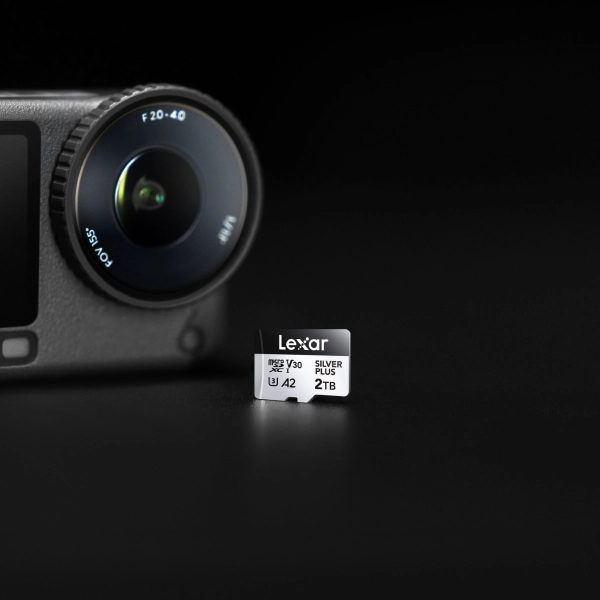
The Insta360 Ace Pro 2 is an 8K AI-powered action camera with a 1/1.3″ sensor, up to 8K 30fps recording, 4K at 120fps, and a 157° ultra-wide field of view. It supports video bitrates up to 180Mbps – which is about 22.5MB/s of continuous data. Again, V30 UHS-I is the right spec profile.
The Ace Pro 2 requires exFAT-formatted UHS-I cards, V30 minimum, up to 1TB. The Lexar® Professional SILVER PLUS microSDXC™ UHS-I Card is a confirmed top pick for this camera, with UHS-I V30 specs that match the device’s architecture and write speeds that comfortably cover 8K and 4K high-frame-rate modes.
For the Ace Pro 2, capacity selection comes down to how you shoot:
- 128GB: Sufficient for shorter sessions and everyday 4K content
- 256GB: A well-rounded option for a full shooting day at 4K or mixed resolutions
- 512GB or 1TB: The right pick for extended 8K sessions, events, travel, or any situation where you can’t stop to offload
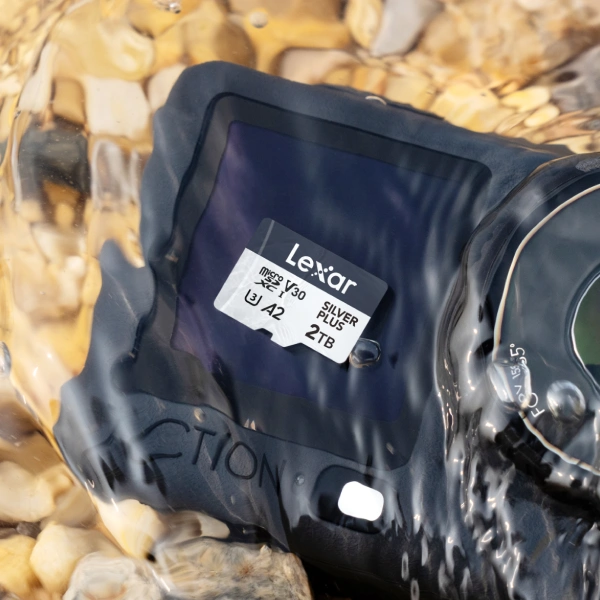
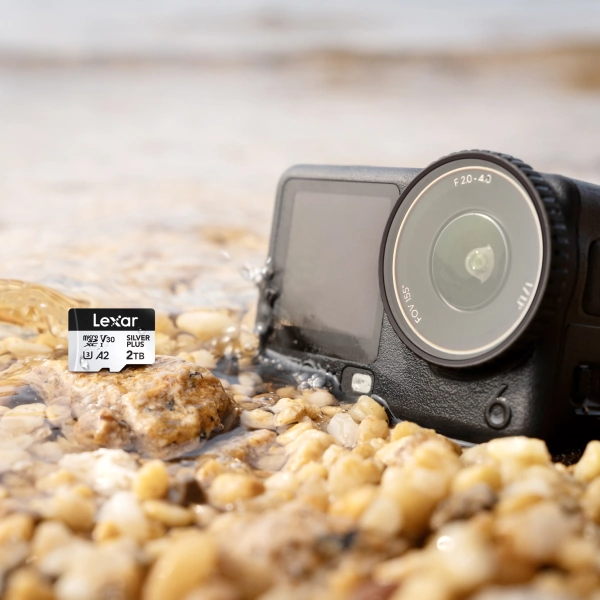
The Ace Pro 2 also carries IPX8 waterproofing to 12 meters. Your card should be equally field-ready. The Lexar® Professional SILVER PLUS microSDXC™ UHS-I Card is IPX7 waterproof (1m for 30 minutes), plus drop-proof, shockproof, temperature-proof, magnetic-proof, x-ray-proof, and vibration-resistant – built for the same conditions the camera is made for.
The Insta360 X5: 8K 360° With a Replaceable Lens
The X5 is Insta360’s flagship 360 camera, capable of 8K at 30fps and 5.7K at 60fps through two lenses that are now user-replaceable. It generates some of the largest file sizes of any action camera on the market. An 8K 360° recording at high bitrate requires a card that can sustain writes reliably for long, uninterrupted sessions.
X5 storage requirements match the other two devices: UHS-I, V30 or higher, exFAT, maximum 1TB. The Lexar® Professional SILVER PLUS microSDXC™ UHS-I Card is compatible with the X5 and confirmed to support 8K recording without buffering issues.
One practical note for X5 shooters: the X5’s built-in video compression engine makes its 8K files roughly 20% smaller compared to the previous generation. This means a 512GB card goes further than it would have with the X4. That said, 512GB remains the sweet spot for creators who shoot in longer sessions or don’t want to stop for file management during the day.
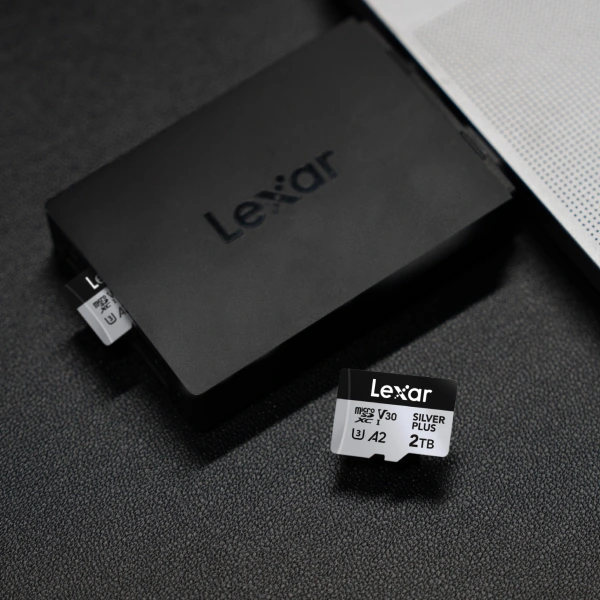
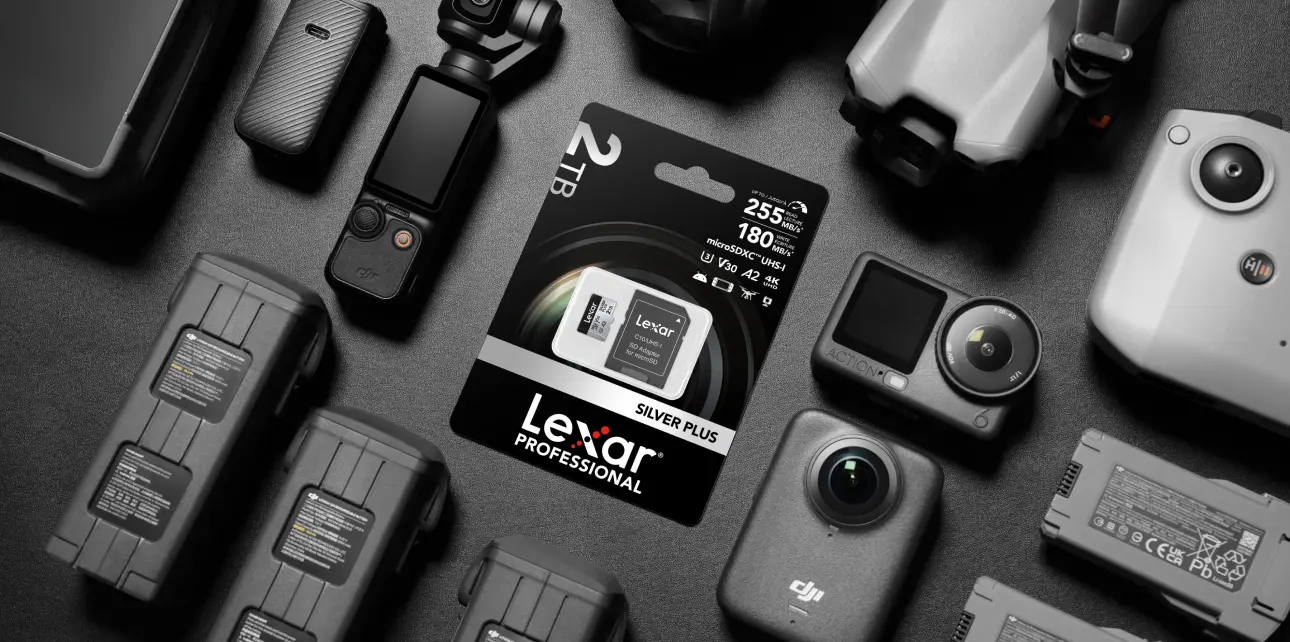
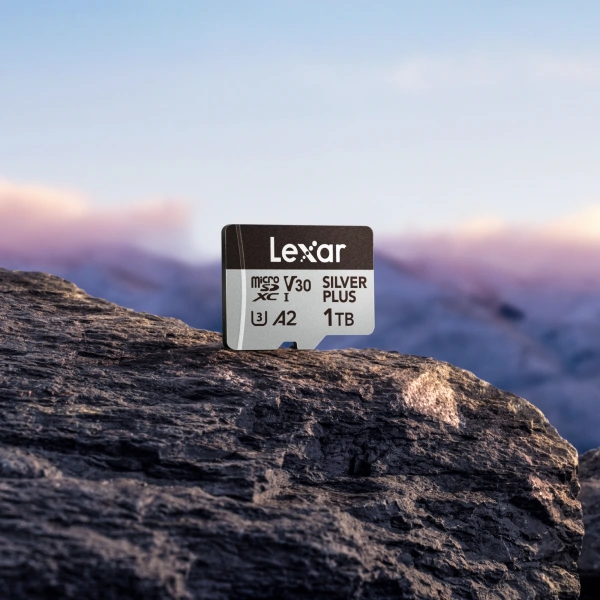
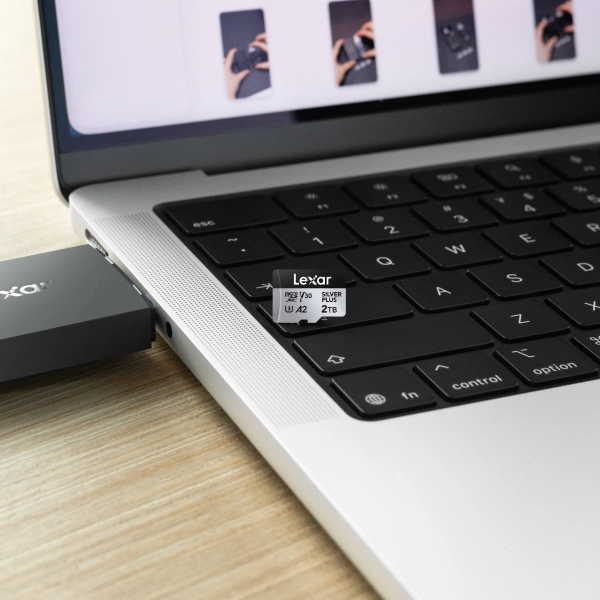
Lexar® Professional SILVER PLUS microSDXC™ UHS-I Card – Full Specs
For all three cameras above, this is the Lexar card that hits the compatibility and performance requirements:
- Capacities: 64GB | 128GB | 256GB | 512GB | 1TB
- Performance (128GB – 1TB): Up to 205MB/s read, 150MB/s write
- Performance (64GB): Up to 205MB/s read, 100MB/s write
- Speed Class: V30, A2, UHS-I
- Form Factor: microSDXC UHS-I (includes SD adapter)
- Durability: IPX7 waterproof (1m / 30 min), drop-proof (1.5m), shockproof (1500G), temperature-proof (-25°C to 85°C operating), x-ray-proof, magnetic-proof, vibration-resistant
- Warranty: Limited Lifetime Warranty
- Recovery: Includes Lexar Recovery Software
Capacity Guide: How Much Do You Actually Need?
One minute of 8K 360° footage on the Antigravity A1 generates approximately 1GB to 1.5GB. The Ace Pro 2 and X5 run in a similar range at 8K. As a working reference:
- 128GB: Short sessions, casual 4K content, or everyday use
- 256GB: A full shooting day at moderate resolution – the most common practical choice
- 512GB: Travel, long-form projects, professional sessions where you can’t stop to offload
- 1TB: Maximum supported by all three devices – extended expeditions, multi-day shoots
Frequently Asked Questions
What microSD card does the Insta360 Antigravity A1 drone require?
The Antigravity A1 requires a UHS-I microSD card rated V30 or higher, formatted in exFAT, with a maximum capacity of 1TB. The Lexar® Professional SILVER PLUS microSDXC™ UHS-I Card (128GB-1TB) meets all of these specifications and is compatible with the drone’s 8K 360° recording at up to 170Mbps.
Can I use a UHS-II microSD card in the Insta360 Ace Pro 2?
No. The Ace Pro 2 uses a UHS-I microSD slot that cannot read the extra row of contacts on UHS-II cards. Using a UHS-II card will result in significantly reduced performance compared to its rated speed and can cause recording interruptions or corrupted footage. Use UHS-I V30 or higher cards only.
What are the benefits of UHS-II?
UHS-II cards offer much faster read and write speeds over UHS-I, providing an ideal solution for 4K/8K video, high-speed burst photography, and faster file transfers. Higher sustained write performance (usually V60 or V90) help prevent dropped frames and clears camera buffers more quickly.
UHS-II is especially valuable for professional workflows where speed and reliability are critical factors.
What is the maximum microSD card capacity for the Insta360 X5?
The Insta360 X5 supports microSD cards up to 1TB. Cards above 1TB are not compatible and may cause recording issues. The Lexar® Professional SILVER PLUS microSDXC™ UHS-I Card is available in capacities up to 1TB, making it a compatible choice for the X5.
Does the Lexar® Professional SILVER PLUS microSDXC™ UHS-I Card work with action cameras and drones?
Yes. The Lexar® Professional SILVER PLUS microSDXC™ UHS-I Card is rated V30, UHS-I, with up to 205MB/s read and 150MB/s write speeds (128GB-1TB), and is tested for compatibility with devices from DJI and GoPro in addition to the Insta360 lineup. Its IPX7 waterproofing, shockproof, and vibration-resistant construction makes it suitable for demanding outdoor environments.
Is V30 fast enough for 8K recording on the Insta360 Ace Pro 2 and X5?
Yes. V30 guarantees a minimum sustained write speed of 30MB/s. The Ace Pro 2’s maximum video bitrate of 180 Mbps requires approximately 22.5MB/s of sustained write speed. The X5’s 8K mode requires a similar sustained rate. V30 provides a reliable buffer above both thresholds, and the Lexar® Professional SILVER PLUS microSDXC™ UHS-I Card’s actual write speeds of up to 150MB/s (128GB-1TB) far exceed the minimum requirement.
How much storage do I need for a day of 8K filming with the Insta360 Antigravity A1?
One minute of 8K 360° footage takes up approximately 1GB to 1.5GB. A 20 to 25 minute flight generates roughly 20GB-35GB. For a full day, 256GB covers moderate use while 512GB or 1TB is the better choice for extended shooting or professional projects.
The Right Card for the Shot You Can’t Reshoot
A drone flight, a one-time event, an action sequence that took hours to set up – these aren’t moments you can repeat. The microSD card in your Antigravity A1, Ace Pro 2, or X5 is the last line between your footage and a blank file.
For all three devices, the Lexar® Professional SILVER PLUS microSDXC™ UHS-I Card hits every spec: UHS-I bus, V30 rated, up to 205MB/s read and 150MB/s write (128GB-1TB), exFAT compatible, available in capacities up to 1TB, and built to survive the same conditions your camera is made for.
Get the right card. Keep your footage.