
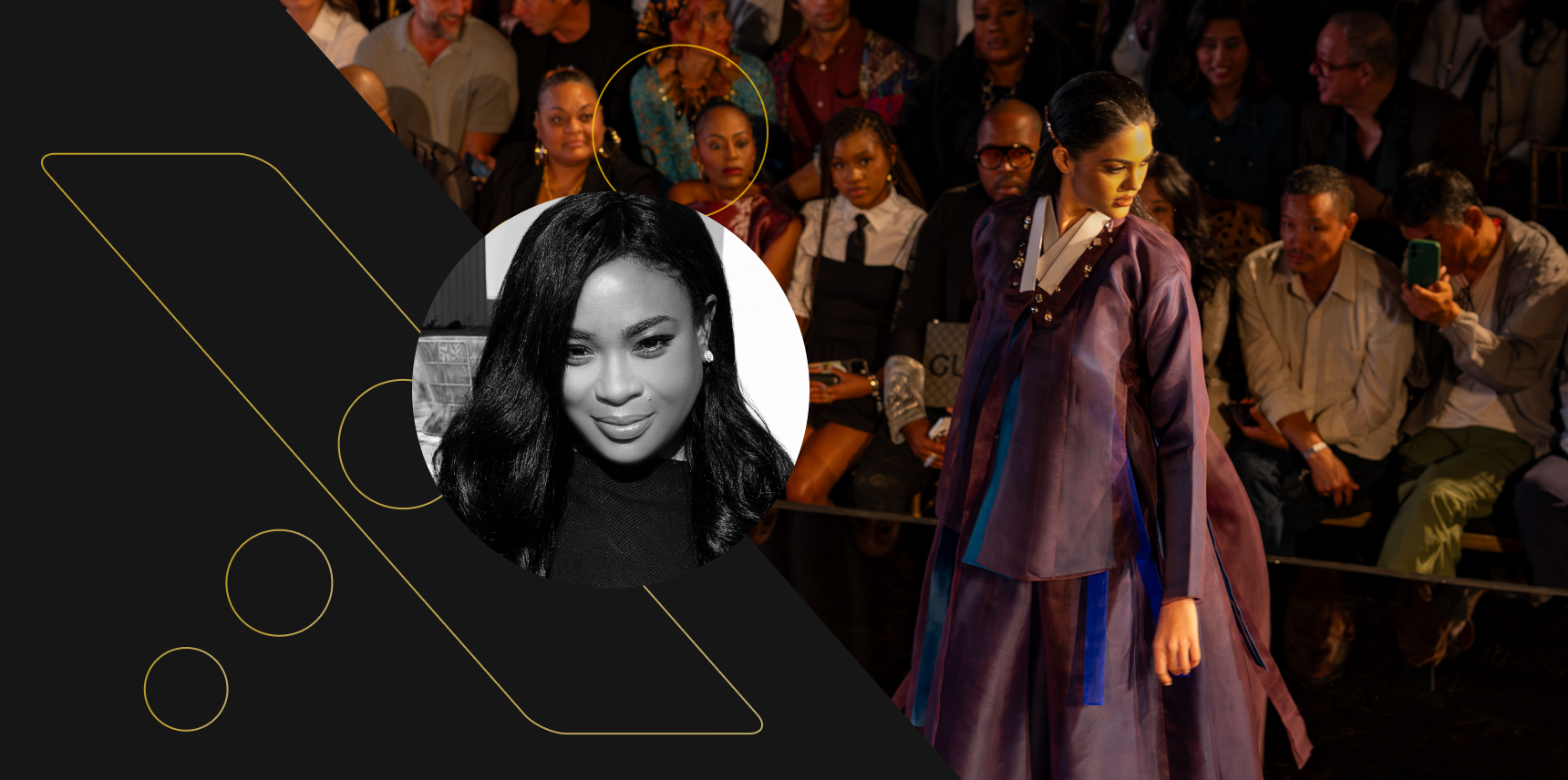


In her first trip to New York in more than 10 years, professional photographer Laretta Houston had the opportunity to return to one of her first loves: the world of fashion. After her first-time experience at the 2026 New York Fashion Week, Houston was firmly reminded why she fell in love with fashion and photography in the first place.
After 21 years as a professional photographer and director, Laretta Houston has seen a thing or two. She spent the first decade of her career deep in fashion and beauty, working to define who she was behind the lens. Over time, her work shifted toward advertising, commercial campaigns, and Hollywood clients in Los Angeles.
However, that shift isn’t without challenges.
“I’ve been trying to figure out where I stand,” Houston says. “A trip to shoot a football match in Argentina got me out of my routine and started to shake things loose in a good way.” Then came an invitation to New York Fashion Week, returning to the runway, the backstage chaos, and the city she loves.
“One trip to New York did the rest.”
Why New York Fashion Week Still Matters
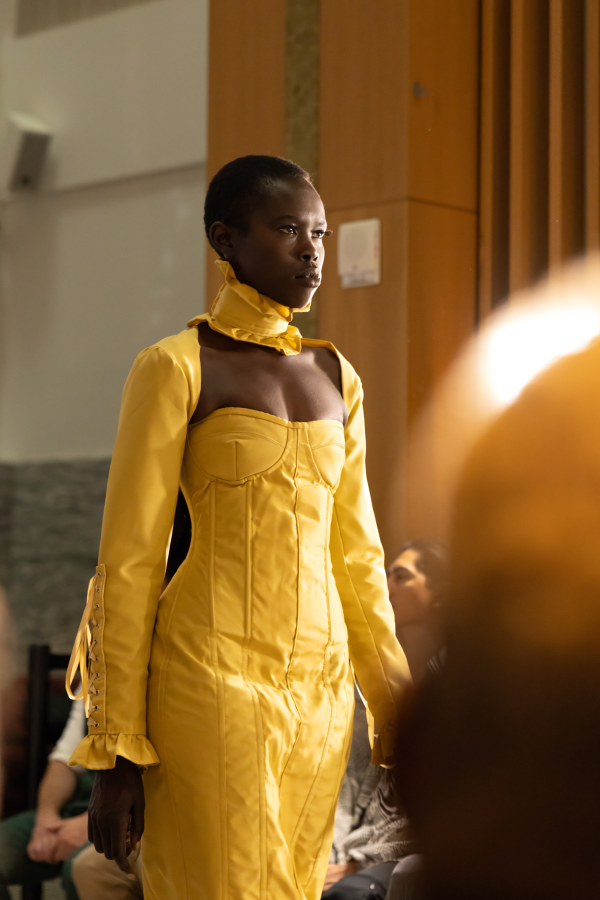
New York Fashion Week runs twice a year: September shows spring and summer collections, and February shows fall and winter. Alongside Paris, Milan, and London, it is one of the world’s primary fashion hubs. Designers debut cohesive collections of anywhere from ten to fifty looks, and models arrive from Russia, Sweden, London, Paris, and beyond.
Competition is fierce. A single casting can draw hundreds of models for roughly thirty spots, each given a few minutes to show their walk and portfolio.
“If you’re looking for feedback, New York is not it,” Laretta explains.
Houston got in through Maison Privée PR, an agency that specializes in working with celebrities and magazines for natural exposure. When Laretta asked about coverage, the agency’s owner invited her as her plus-one to the show, and asked Houston to be her photographer for the event.
Friday: A Couture Show from the Audience
Laretta arrived on Thursday, September 10. Her first show on Friday was as a guest, not a credentialed photographer. The venue was a converted hotel corridor lined with seats, with celebrities and buyers in the VIP section across the runway.
Once in her seat with the regular audience, Laretta pulled out her camera and shot from her location without moving seats. The results were a step above a normal person with a phone camera.
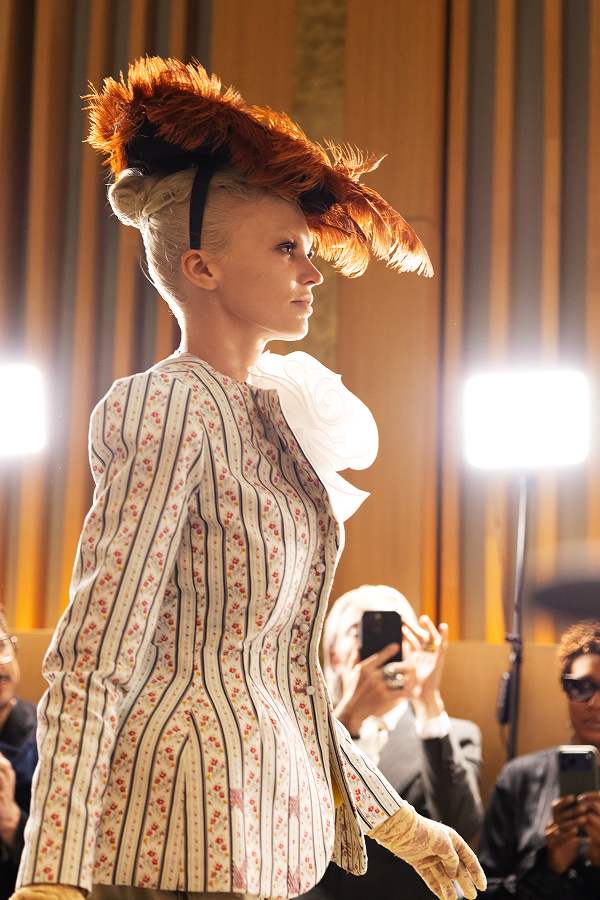
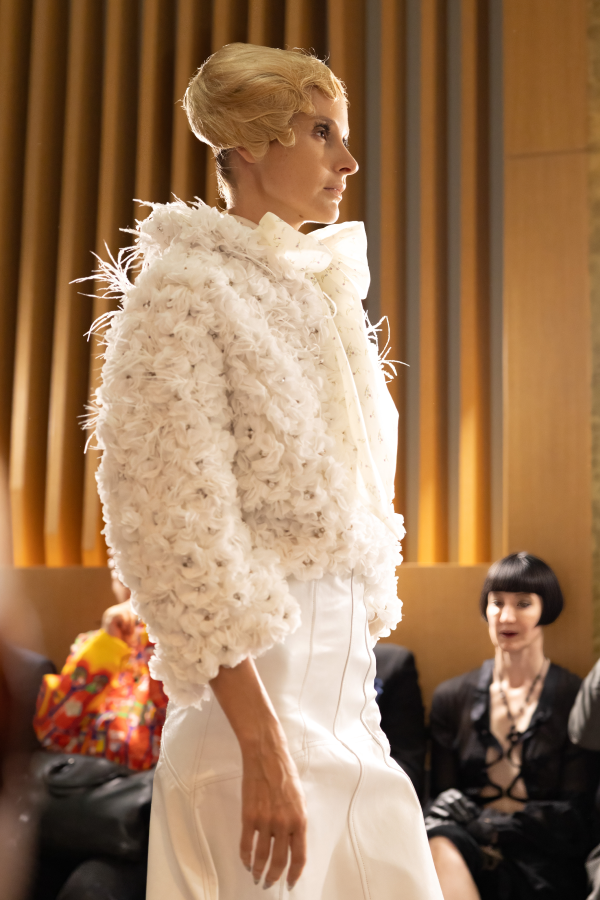
The collection was couture, with ostrich feathers in the hats and theatrical silhouettes. “Couture means you only make it one time and that’s it,” she explains. “It’s an item that you will find in museums.”
The venue had its limits, since guests could only see each look as it passed directly in front of them. Still, watching garments move on a live model rather than hang on a rack reminded her why she fell for fashion in the first place.
Friday Night: Backstage Chaos at Arts Fashion
That evening, Laretta went backstage at Arts Fashion on the Lower East Side. This show featured emerging designers working on smaller budgets, often with models still building their careers. “They’re just trying to make their mark,” she says, and she sees herself in that: “Let me figure out my lighting, so when everybody sees my picture, they already know it’s Laretta.”
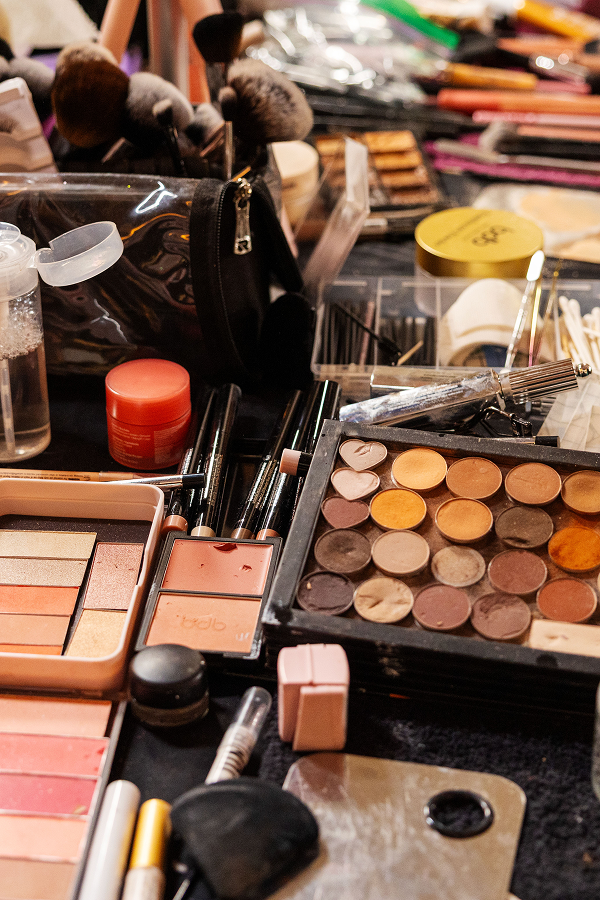
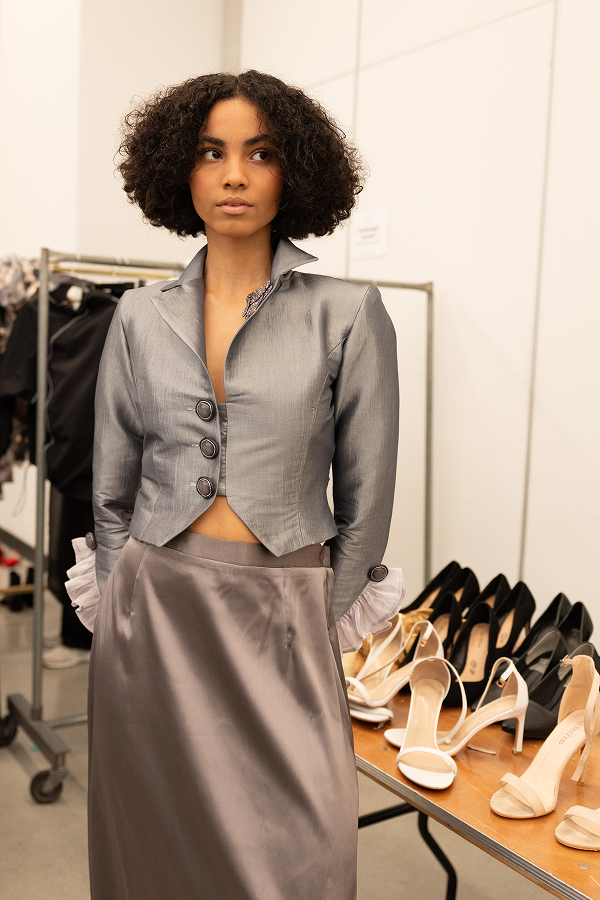
The building had three floors. The audience sat on the main level. Downstairs, stylists steamed garments, makeup artists ran for hairspray, and models changed in seconds. Upstairs, a VIP balcony let Laretta shoot the runway from above. Beyond the agency’s client, she photographed about five designers, including Asian, African American, and European designers. Neon tones, cherry red, and silver dominated the looks.
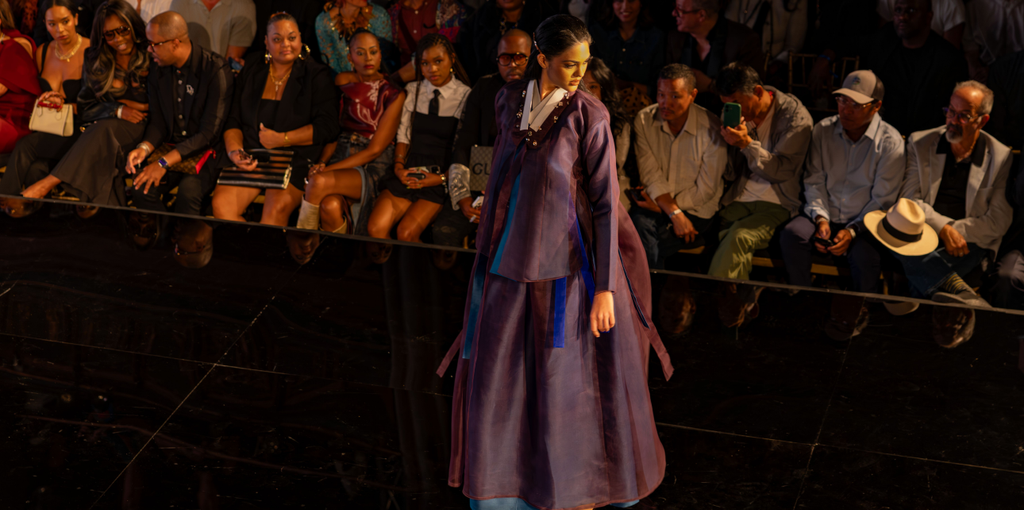
The venue was dark and compact, and the ceilings weren’t all white, which made bouncing light difficult. When she was assigned a corner with harsh continuous lights, she moved models into a middle room so her flash could hit a white wall. “You have to find the lighting, you have to find everything,” she says.
That problem-solving is exactly what she loves. “That is what I’m known for: solving problems,” she says. “Something happens at a venue. I got it. I’ll fix it.”
Saturday: A Birthday in the Second Row
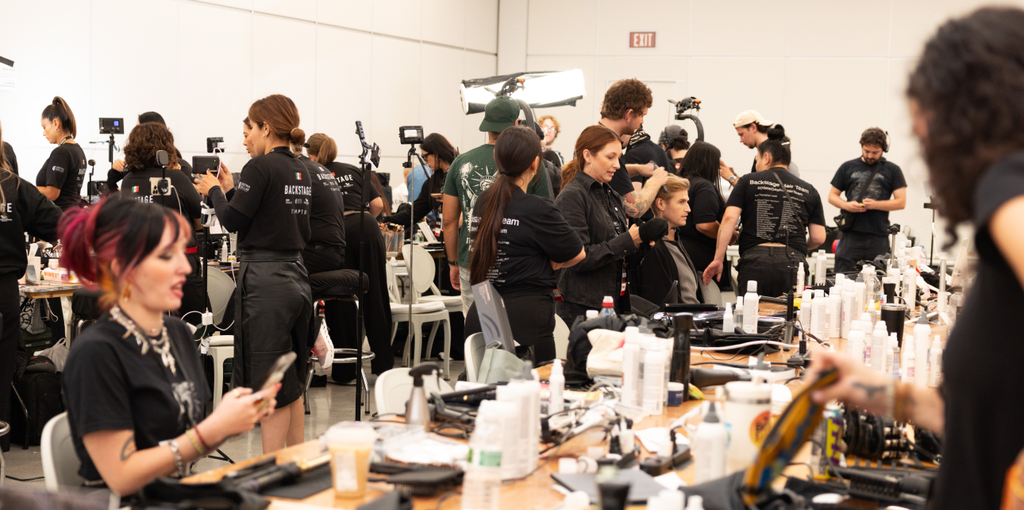
Saturday was Laretta’s birthday, and she spent it at an upscale show for another of the agency’s clients. The bigger budget showed: a larger venue, coordinators with badges, a dedicated video crew, and a hair and makeup team all dressed in matching black. Laretta wore black too and blended right in.
Backstage was busy but organized. Designers showed back-to-back and often shared models, so a model might walk the first collection, sit out the second, then change for the third. Laretta photographed the makeup artists, hair stylists, designers, and models before taking her seat in the second row.
Her favorite moment came at the end. “To see how the models are full of anxiety, and then they come back accomplished and happy,” she says. “The designer is like, oh my god, they’re gonna love my work.”
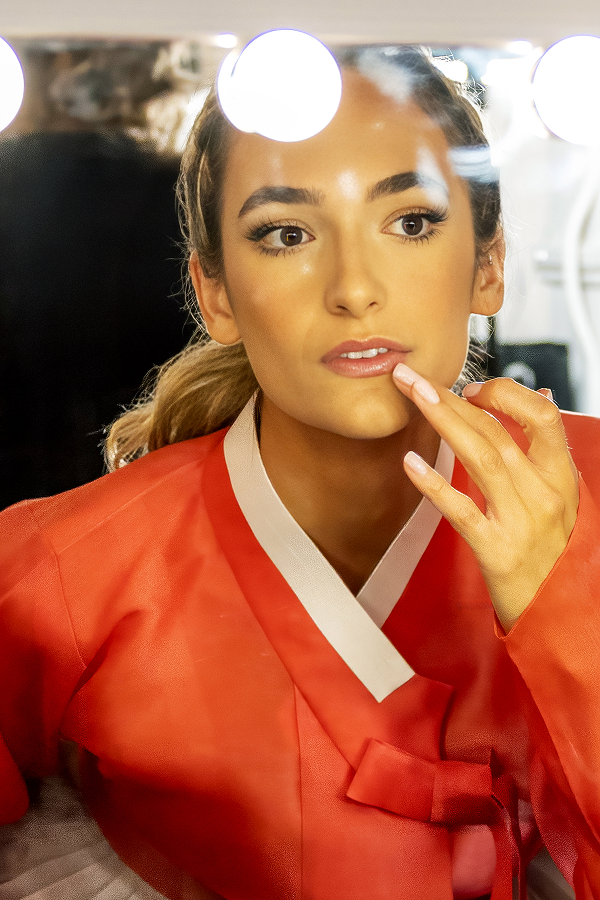
Runway coverage leaves little room for creativity, since the looks, walks, and expressions are fixed. Backstage is different. “It’s kind of like event photography mixed with fashion and the chaos of football,” she says. A model checking her lips in a mirror or a cloud of hairspray around fresh curls becomes the creative shot.
The Gear: Light, Fast, and Ready Before the Doors Open
At Fashion Week, there is no workflow on location. “You literally have five seconds to turn around before there’s something you missed,” Laretta says. There’s often nowhere to set a bag down, so every photographer works with a camera around the neck and a flash on top. All the prep for fashion photography happens before the show.
Her kit was built for speed:
- Canon EOS R5 Mark II: her primary mirrorless body, with dual card slots for CFexpress and SD card recording.
- Canon RF 24-70mm: her go-to lens for beauty, portraits, and full-body fashion in tight backstage rooms, and the same lens she uses on advertising campaigns.
- 35mm and 70-200mm lenses: the 35mm for close quarters, the 70-200mm only when distance demanded it.
- Godox on-camera flash: essential in dark venues with poor overhead lighting.
- Canon G7X Mark III: for behind-the-scenes video
- Photo assistant: Laretta’s daughter was equipped with a phone to help capture content backstage.
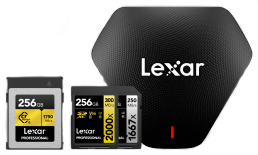
- Lexar® Professional GOLD CFexpress 4.0 Type B Card (1TB): a CFe card fast enough to keep up with rapid bursts in the R5 Mark II.
- Lexar® Professional Workflow CFexpress 4.0 Type B Card Reader: for quick offloads between shows.
In her workshops, Laretta usually recommends smaller-capacity cards that you swap often, so one failure never costs a full shoot. Fashion Week forced a different approach. “When you use the smaller cards, it’s because you have enough time,” says Houston. “Here, I have like five minutes.”
A high-capacity Lexar CFexpress card meant she never had to stop shooting to change cards. She even missed a few models heading to the runway while adjusting her flash, a reminder of how little margin there is.
Why the Best Card Reader and Cards Matter
Laretta carried 13 memory cards and six batteries for the weekend. Bigger cards didn’t mean less caution. With no table backstage, she backed up files on her laptop in the Uber and again at the hotel, copying card to card so every image lived in more than one place.
Houston has learned this lesson the hard way. On one rooftop shoot, a digital tech closed a laptop before the transfer finished, and the files were gone. Laretta lost that client for six months and had to return the fee, even though it wasn’t her fault. “As a photographer, you take all the responsibilities,” admits Houston.
That’s why she treats dual card slots as non-negotiable for professional photography and relies on Lexar for both her cards and her card reader. When you are offloading in the back of a car between shows, the best card reader is one that is fast and dependable every single time.
Once back at her home base, Laretta has a complete post-production workflow to prevent any data loss.
Back to Her Roots, and Back to Herself
Laretta hadn’t been to New York in ten years. Back when she lived in Atlanta, she visited almost monthly, exploring everywhere from Tribeca to SoHo to Central Park. Walking those streets again, among painters, photographers, and craftspeople from every culture, felt like coming home.
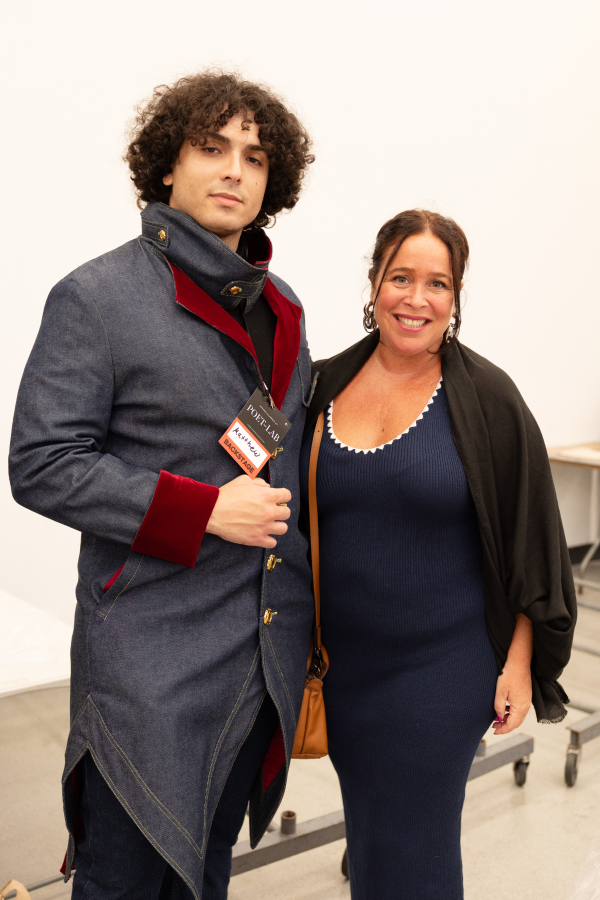
“Every corner is different, and that’s very exciting,” says Houston.
Sharing her first New York Fashion Week experience with her daughter made it sweeter. In New York, she watched Houston hustle backstage the way she did at the start of her career.
Laretta has always believed in speaking her goals into existence, from working with Tyra Banks to shooting for Sports Illustrated. New York Fashion Week was another wish checked off the list, and she cried on the way home.
“This trip helped me find myself again, find my passion and my path” says Houston. “I’m back.”